
Find of the Month
July 2025
Wet garbage and prize-winning porkers:
The story of the Canberra Hog Farm
This article is a revised version of the October 2015 Find of the Month
Some residents of the central Canberran suburb of North Watson may not be aware that they live on what was once a pig farm of international repute. In fact, in the 1920s a pig farm was considered practically essential to the development of a brand-new national capital like Canberra.
This history of the Commonwealth Stud Pig Farm, more commonly known as the Canberra Hog Farm, covers a saga of ancient mystical powers, interdepartmental warfare, champion pigs and perhaps Canberra's first foray into agritourism.
The file TL7764: Department of the Interior - Planning and Development Branch - Block 66 Gungahlin - Hog Farm is the basis of this month's ArchivesACT Find of the Month.
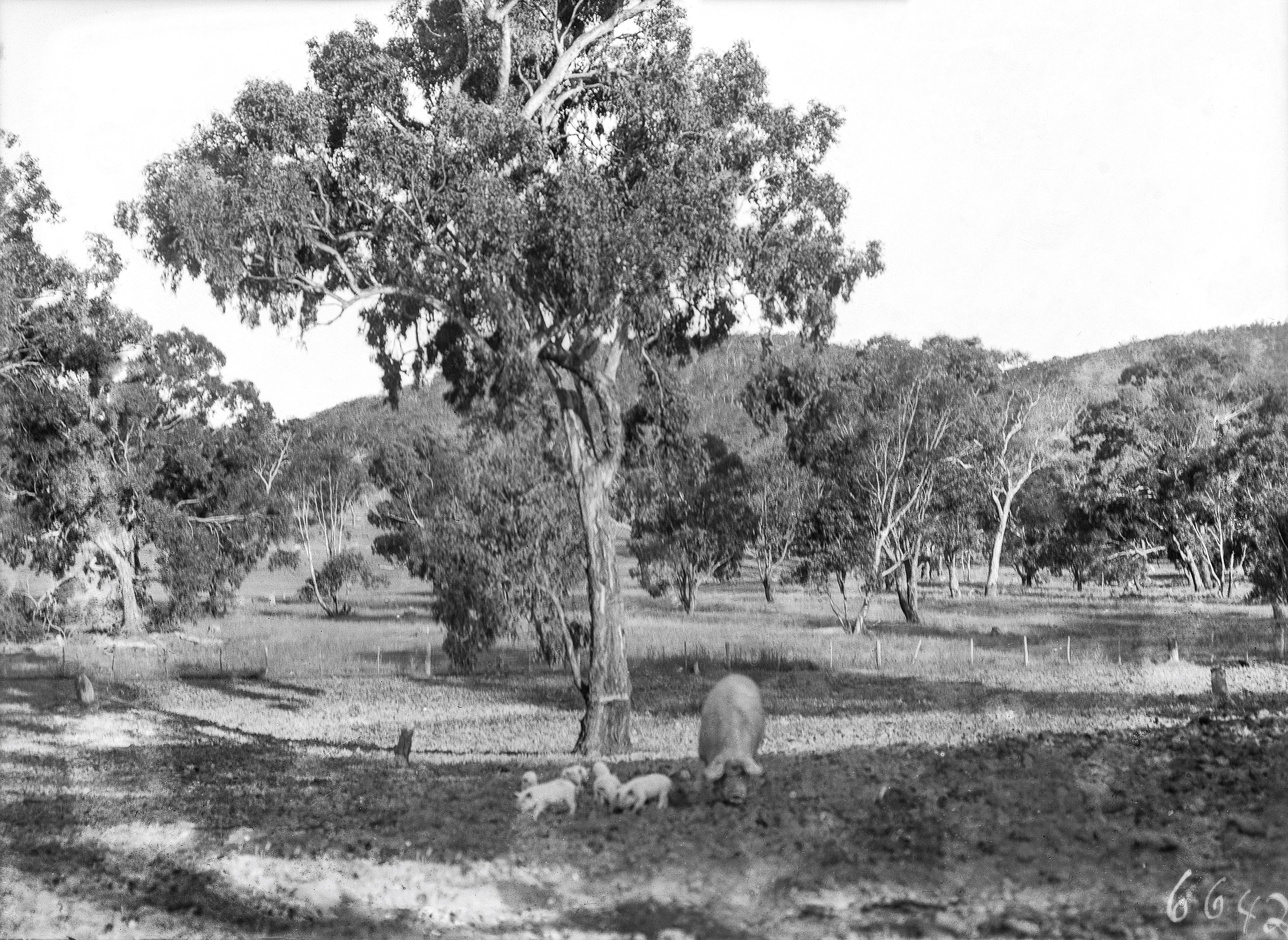
Fig. 1. William James Mildenhall – Hog farm, 1931
The farm operated from 1929 to 1956, serving as a pork and bacon producer and as a stud for prize-winning boars and sows. It was run by private enterprise by tender to the Federal Capital Commission.
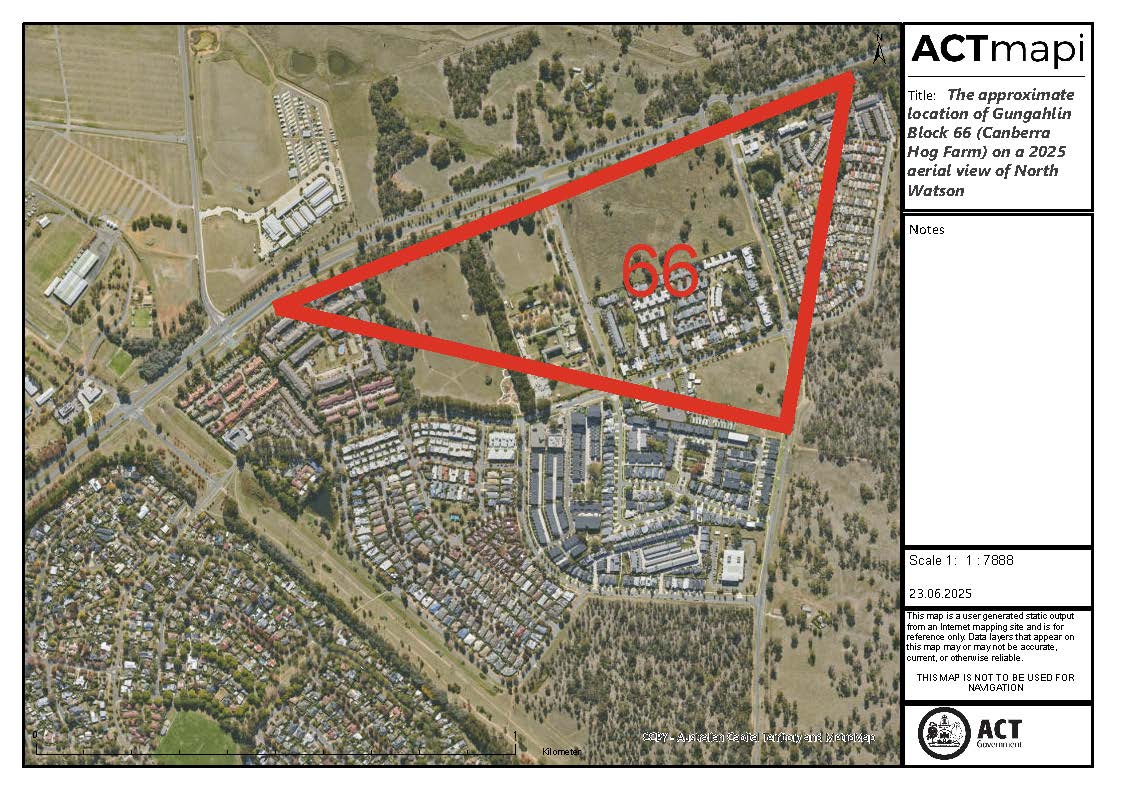
Fig. 2. The approximate location of Gungahlin Block 66 on a 2025 aerial view of North Watson
The farm provided a considerable service to the developing city as a “wet waste” disposal system, recycling up to six tons of kitchen scraps collected from local hotels and hostels daily. The scraps were cooked in large coppers on-site, then used as pig feed.
Originally planned near Duntroon, the farm was located in Gungahlin Block 66, near Mount Majura, which offered better space and drainage. First managed by Alexander Coles under Commonwealth Stud Farms Ltd., the facility was built with modern scientific principles and included extensive infrastructure for pig rearing.
A reliable, high volume water supply is essential for the hygienic rearing of pigs, and water supply issues plagued the farm from the start. Despite early assurances, the well and dam often failed, prompting repeated tests, divining rod searches, and bore drilling (see Fig. 3). Even with interventions, water shortages persisted, leading to costly water carting and infrastructure upgrades.
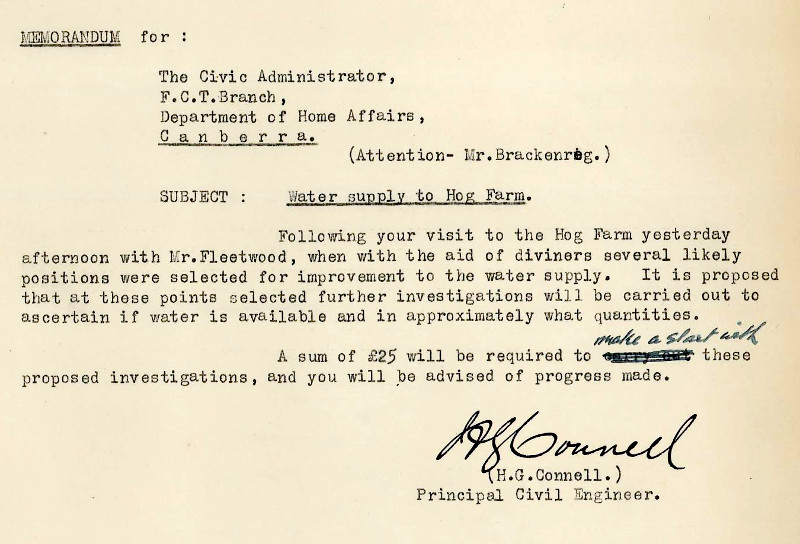
Fig. 3. Memo from Principal Engineer, H.G. Connell to Lands Officer James Brackenreg, 11 March 1931
Despite these challenges, the farm thrived under manager R.A. Guthridge in the 1930s. It produced pigs of exceptional quality, winning numerous awards at the 1934, 1935 and 1936 Royal Easter Shows.i The farm’s letterhead (Fig. 4) proudly advertised its success with the Large White breed, including a weight-for-age world record for the litters of sow Vaucluse Jewel 5th:
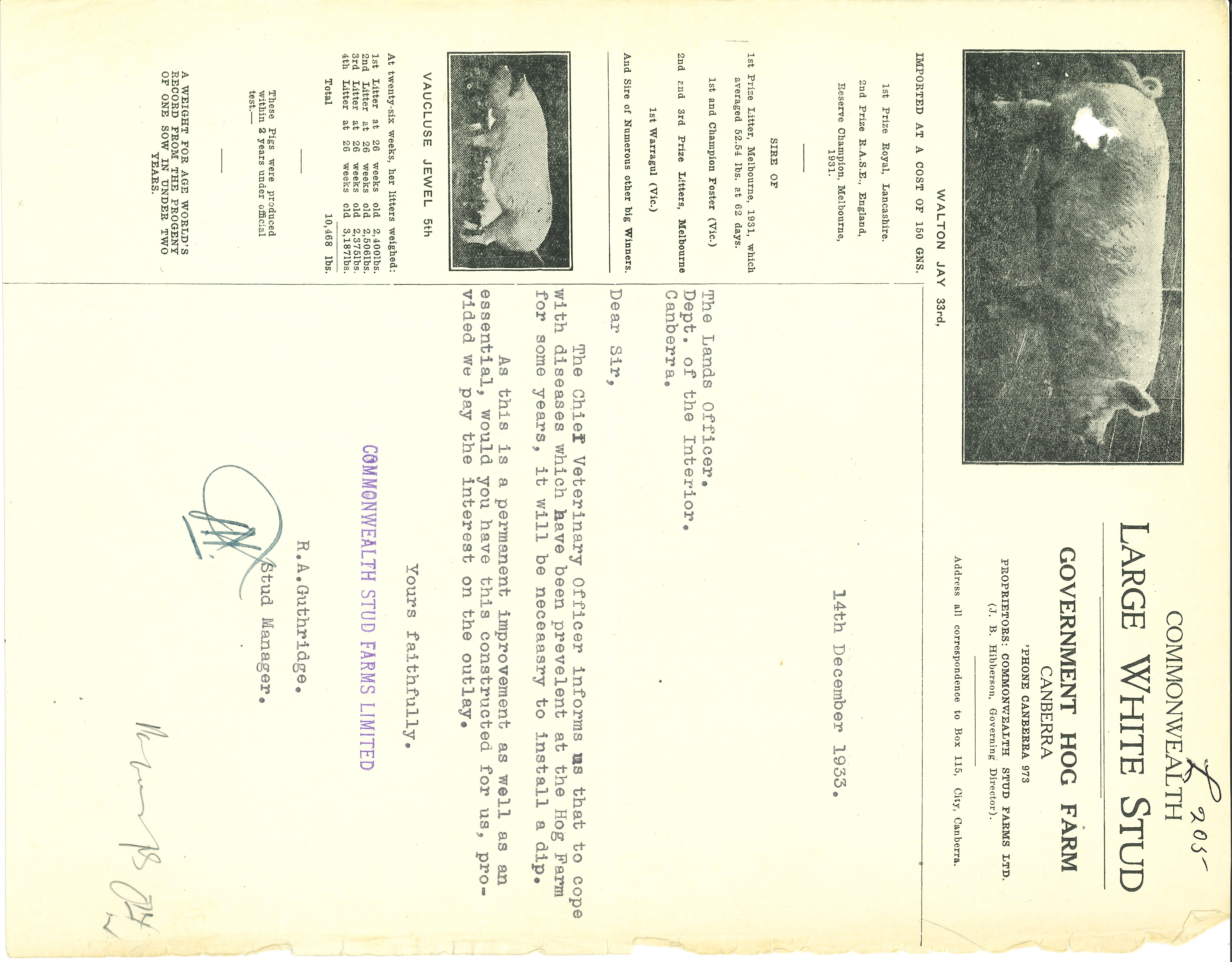
Fig. 4. Letter from R.A. Guthridge to the Department of the Interior, 14 Dec 1933
Mr Guthridge’s work earned widespread recognition within the industry. The Farmer and Settler newspaper praised not only the quality of his stock but also his approach to animal welfare:
Pig raising can be made very profitable to the farmer if he be a man that will take a reasonable interest in the comfort of his animals. It is better to give pigs comfort and a clean run rather than see them huddled up in filthy sties that are never clean from one year’s end to another. Pigs like to have their own way, and if shade and water are available, they know how to use them for their own comfort. The reason pigs scald is because they are forced suddenly from a shaded country to strong exposure, and are forced to remain out in the heat and sun when not used to it. At the Canberra farm the pigs are run out into the paddocks, except for short periods before farrowing, when the sows are brought in for a few days, after which they are returned to the lucerne paddocks. Self feeders are provided at the farm, and the supply of feeding stuffs is so regulated that the pigs are enabled instinctively to balance their own rations.
The Hog Farm even rated a glowing review in the 1934 publication, Canberra: A City of Flowers – Official Tourist Guide to Australia's National Capital, boldly stating that the farm was destined to be “the National Capital’s greatest industry”:
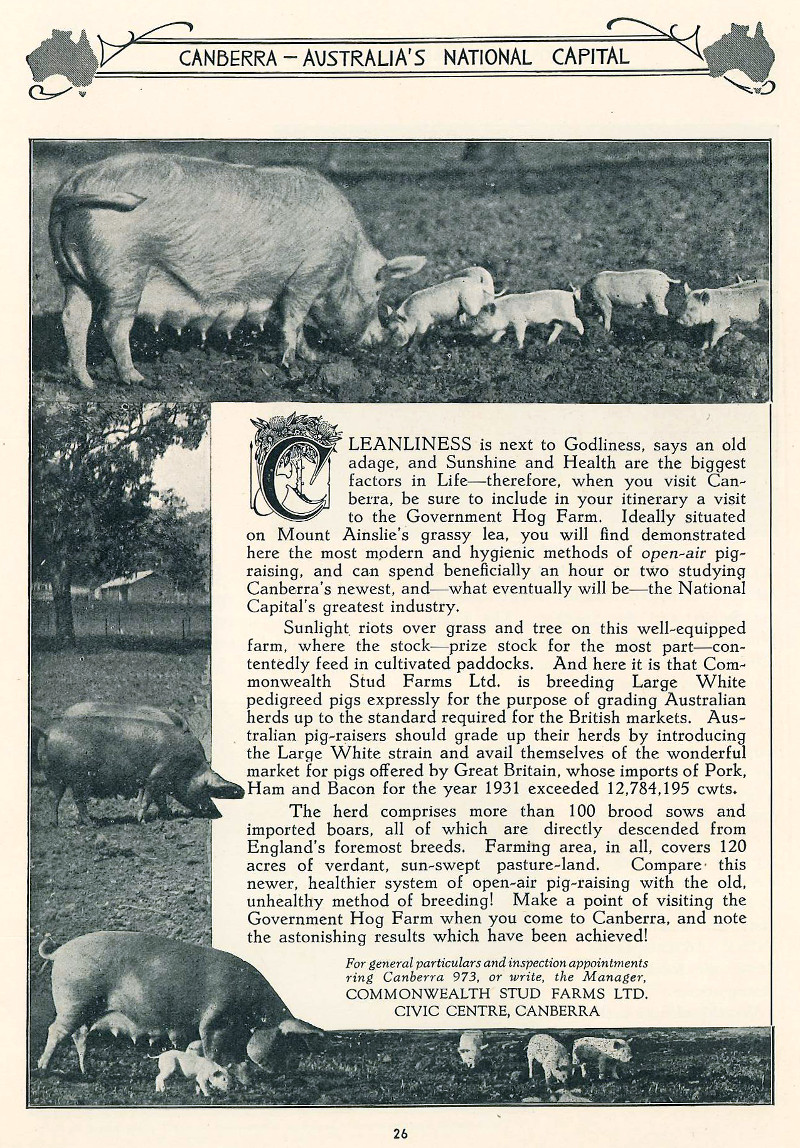
Fig. 5. Canberra: A City of Flowers – Official Tourist Guide to Australia's National Capital
Despite these accolades, difficulties with water supply, hygiene and responsibilities for infrastructure upgrades proved persistent. A bureaucratic feud between the Departments of Interior and Health over costly upgrades to the farm flared up in 1944, dragging on for years and nearly resulting in its closure. The Department of Interior refused to fund improvements mandated by the Health Department, including a connection to the city water supply, and the Health Department ordered the farm to close. Dr L.W. Nott of the ACT Advisory Council criticised the standoff, calling it “the culmination of a disgraceful piece of bureaucratic make-believe”.
The Advisory Council file relating to the farm (UNREG-2286) includes a clipping of a tongue-in-cheek Sydney Morning Herald article describing the dispute. Perhaps it offered a moment of levity for readers amid the grim wartime reports from Europe and the Pacific.
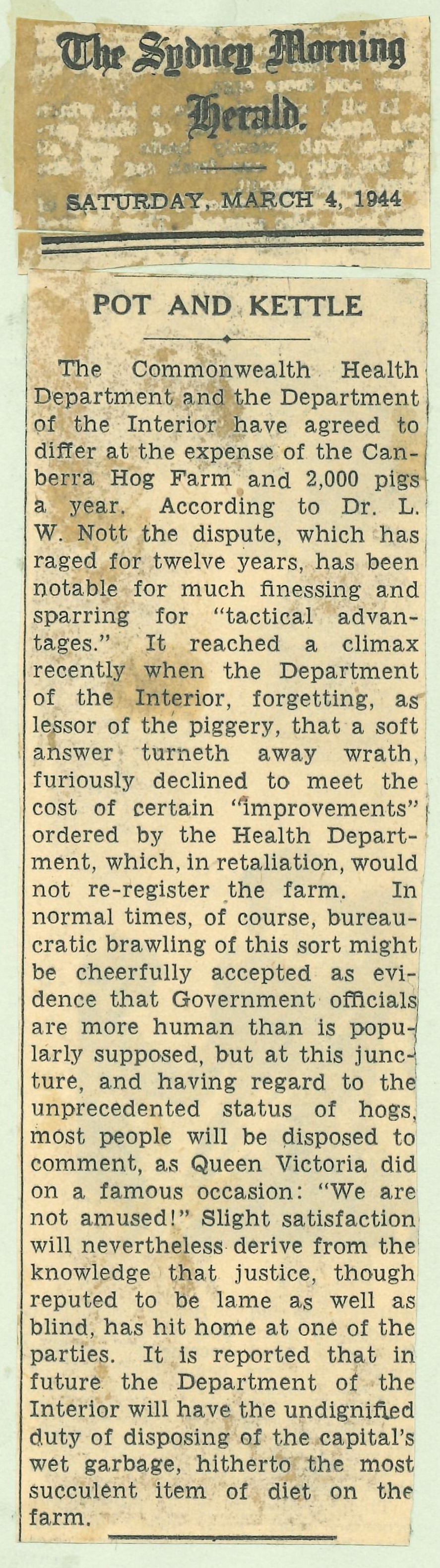
Fig. 6. Sydney Morning Herald report on the Canberra Hog Farm, 4 March 1944
A proposal to move the farm closer to the Molonglo River and the new abattoirs near Mugga was explored by the Advisory Council, with the input of departmental experts – see Fig 7. for some of the minutes about the issue.
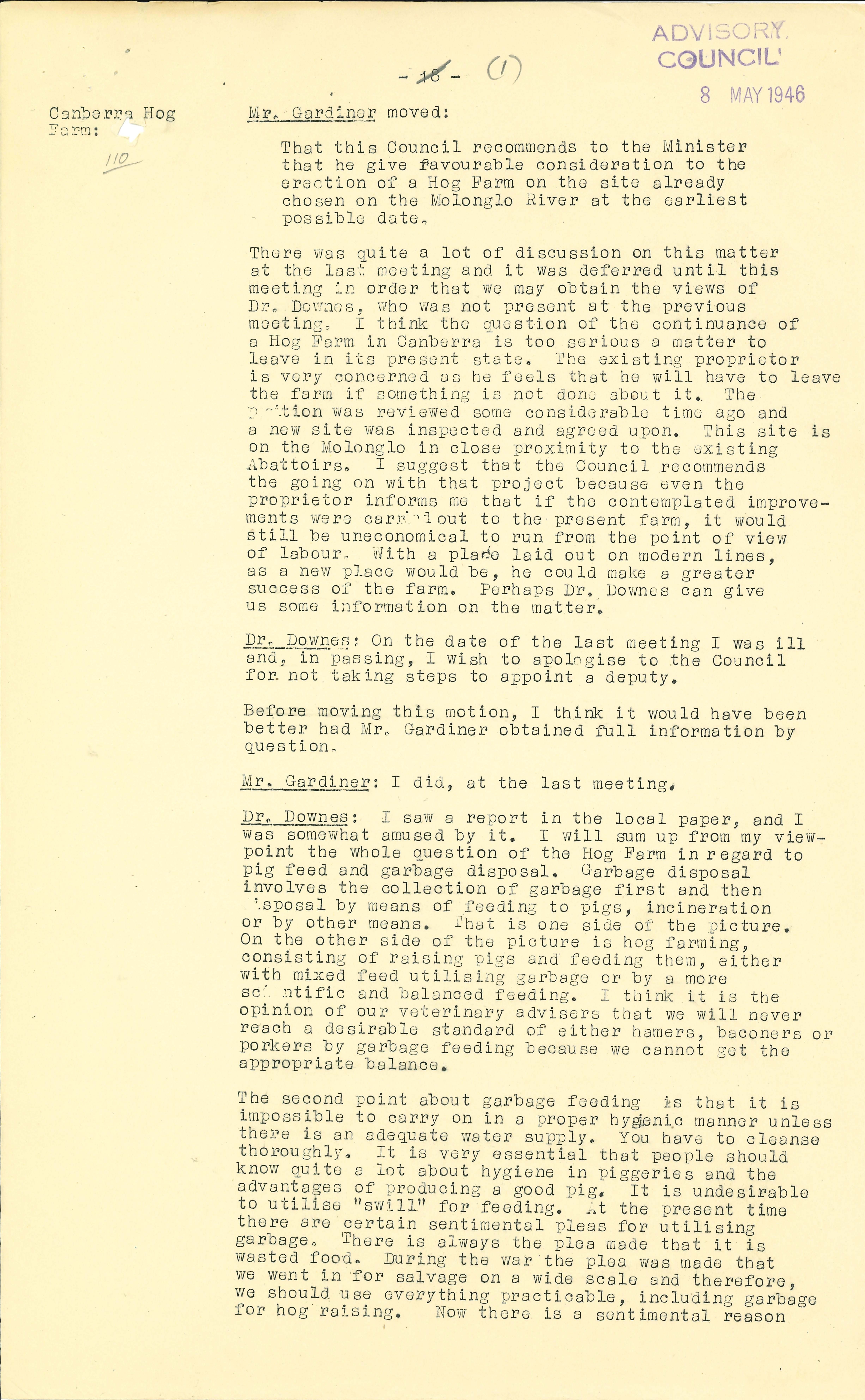
Fig. 7. Minutes of the ACT Advisory Council meeting, 8 May 1946
Ultimately the Health Department advised against relocating the farm, due to the risk of water contamination at the proposed site. With the Departments of Health and the Interior at an impasse, the farm survived until 1956, when the land was resumed for the development of Watson.
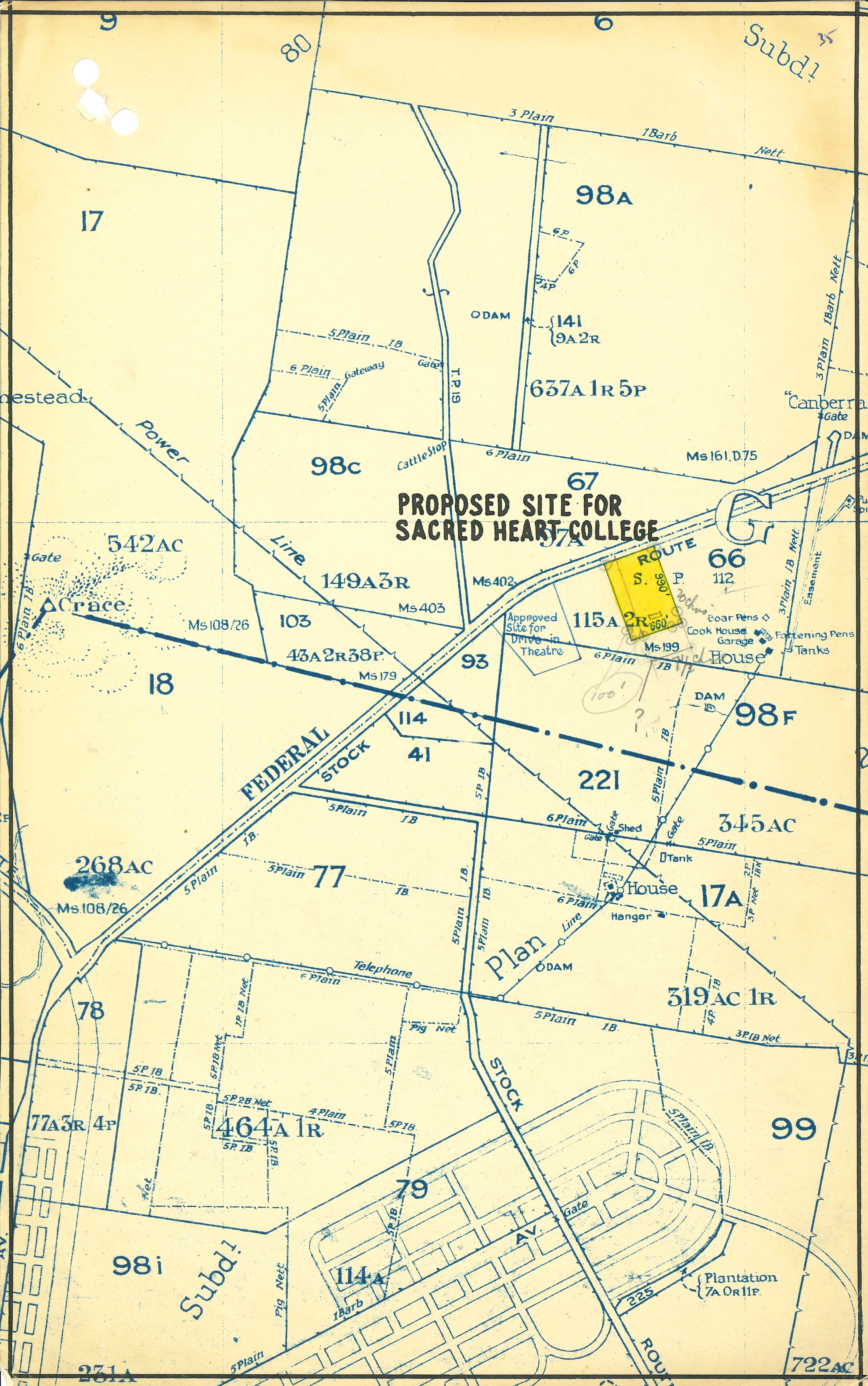
Fig. 8. Map showing proposed subdivision of Gungahlin Block 66, 1955
Its legacy lived on through J.W. O’Sullivan & Sons, a waste collection company that emerged from its operations and was based in Queanbeyan until 2015. The Sacred Heart mission (now the site of Youth with a Mission) was the first to take on a lease of territory land previously occupied by the Hog Farm – see Fig. 8 for an early map of the proposed site. In 1957 another part of the site became home to the Starlight Drive-In. Parts of the former farm are now occupied by suburban homes, including the Solstice complex.
Though much of the Canberra Hog Farm has long vanished beneath suburban streets and homes, its story remains an important chapter in the city’s early development, where innovation, agriculture, and bureaucracy collided in the paddocks of North Watson.
ACT Government files used
Territory Lease file 125/63/1#01: WATSON – 0125, section – 0063, block – 0001, part – 1
Territory Lands Correspondence file TL7764: Department of the Interior - Planning and Development Branch - Block 66 Gungahlin - Hog Farm
UNREG-2286. Advisory Council – Hog Farm
Figures
Fig. 1. William James Mildenhall – Hog farm, 1931. National Archives of Australia
Fig. 2. The approximate location of Gungahlin Block 66 on a 2025 aerial view of North Watson. Source: ACTmapi
Fig. 3. Memo from Principal Engineer, H.G. Connell to Lands Officer James Brackenreg, 11 March 1931. ArchivesACT file TL7764
Fig. 4. Letter from R.A. Guthridge to the Department of the Interior, 14 Dec 1933. ArchivesACT file TL7764
Fig. 5. Canberra : A City of Flowers – Official Tourist Guide to Australia's National Capital. Melbourne: Department of the Interior, 1934. ACT Heritage Library
Fig. 6. Sydney Morning Herald report on the Canberra Hog Farm, 4 March 1944. ArchivesACT file UNREG-2286
Fig. 7. Minutes of the ACT Advisory Council meeting, 8 May 1946. ArchivesACT file UNREG-2286
Fig. 8. Map showing proposed subdivision of Gungahlin Block 66, 1955. ArchivesACT Territory Lease file 125/63/1#01
References
i "SYDNEY SHOW" The Canberra Times (ACT : 1926 - 1995), 28 March 1934: 2. http://nla.gov.au/nla.news-article2343738 ; "EASTER SHOW" The Canberra Times, 16 April 1935: 2. http://nla.gov.au/nla.news-article2389248; "EASTER SHOW" The Canberra Times, 7 April 1936: 1. http://nla.gov.au/nla.news-article2411012
ii "White Pigs Growing in Favor" The Farmer and Settler (Sydney, NSW : 1906 - 1955) 2 March 1933: 8. http://nla.gov.au/nla.news-article117359403.
Ready to start your own research?
Contact us through our Request a record - ArchivesACT and we will be happy to help.
File Readers/Viewers
If you do not already have compatible software on your computer, free file readers/viewers can be downloaded from the following links.
 PDF files require Adobe Acrobat Reader
 PPS files require Microsoft PowerPoint Viewer
 XLS files require Microsoft Excel Viewer