
Find of the Month
May 2025
Proportional representation in action:
30 years of the Hare-Clark system in the ACT

Fig. 1 - 3 Thomas Hare, 1863 - Catherine Helen Spence c.1900, - Andrew Inglis Clark 1909?
We publish this on the eve of a federal election, making it an appropriate time to revisit another vote in which ACT residents participated 30 years ago, on 18 February 1995, to entrench the electoral system that we continue to use in elections for the Legislative Assembly.
Former Chief Minister, Gary Humphries AO, spoke about this topic at his 2025 Canberra Day Oration for the Canberra and District Historical Society: Has ACT self-government been a success?i Mr Humphries’ oration prompted us to look at some of the records relating to the Hare-Clark system in the ACT.
What is the Hare-Clark system?
The Hare-Clark system is a variant of the single transferable vote system (STV), itself a form of proportional representation.ii This means that electors indicate their preferences for candidates by writing numbers against the names of the candidates on their ballot paper, and more than one member is elected to each electorate. This is in contrast to single member electoral systems, such as for the House of Representatives in federal elections.
The Elections ACT website explains that in Hare-Clark:
Each elector has a single vote, but that vote can be transferred from candidate to candidate according to the order the elector writes on their ballot paper.
To be certain of election, a candidate needs a quota of votes. The quota for each of the ACT’s 5-member electorates is about 16.67% of all votes cast.
The quota is calculated by:
- dividing the number of formal votes by one more than there are vacancies in the election
- then adding one (1) to the result.
For an ACT’s electorate with five vacancies this means:
- dividing the number of formal votes by 5 plus one more (5 + 1) which is a total of 6
- then adding one (1) to the result.iii
Names, names, names: A brief history of Hare-Clark
The Hare-Clark system is named in part after the British political reformer Thomas Hare (1806-1891). In Australia, it was often referred to as the Hare-Spence system until the early twentieth century, recognising the advocacy of Catherine Spence. Spence, a prominent suffragist, became an advocate of proportional representation after reading John Stuart Mill’s review of Hare’s Treatise on Representation.iv Spence was Australia’s first female political candidate, and is credited with influencing the colony of South Australia to become the first jurisdiction in the world to give women the right to stand for parliament.v
Although she did not succeed in implementing a single transferrable vote system in South Australia, this does not diminish her legacy, which includes another connection with the ACT. The Belconnen suburb of Spence was retrospectively co-named after Catherine Spence in May 2023.
Ultimately the system became known as the Hare-Clark system after Andrew Inglis Clark, the eminent Tasmanian barrister and federationist, whose amended Electoral Act introduced proportional representation to Hobart and Launceston in 1896. The Electoral Act 1907 extended it to the whole state.vi
Tasmania is also responsible for the innovation of Robson Rotation, the system of rotating the order of names on ballot papers to reduce the impact of donkey votes by ensuring no candidate consistently benefits from being listed in a prominent position. This system was named after Neil Robson, a Tasmanian MP who introduced it there through a private members bill in 1979.vii
Modified d’Hondt in the 1989 and 1992 elections
The first two elections in the ACT under self-government, in 1989 and 1992, used an electoral system called “modified d’Hondt”, in which multiple members were elected to a single ACT-wide electorate. This system was set by the Commonwealth as a compromise between the Liberals’ and Democrats’ preference for Hare-Clark, and the ALP’s preference for single member electorates. Phillip Green, the ACT’s long-standing electoral commissioner, reflecting on his career at his retirement in 2017, described it as “terribly complicated” and a “mish-mash”.viii
The 1989 election for the ACT Legislative Assembly is remembered for its one-metre-long ballot paper, the candidates standing against self-government, and the eccentricity of some of the minor parties. You can see the famous ballot paper, annotated with drawings by Geoff Pryor, at the Canberra Museum and Gallery.ix
The complexity of the electoral system meant that the votes took two months to count. The early years of self-government are similarly known for their political turbulence.
The 1992 advisory referendum and the 1995 entrenchment referendum
Some individuals and groups were particularly engaged in making the case for Hare-Clark in the ACT. The Proportional Representation Society was especially active, bringing Neil Robson of Robson Rotation fame to the ACT in 1991 to campaign for the adoption of the Hare-Clark system here.x
In 1991 several parties—the Liberals, Residents Rally and the Democrats—with the backing of the Proportional Representation Society, came to a unified position supporting one version of the Hare-Clark system for the ACT.xi Dissatisfaction with d’Hondt meant that over time more politicians and electors were receptive to the message that Hare-Clark was a fair alternative, despite its complexity.
In 1992 an advisory referendum was held in conjunction with the Legislative Assembly election. This referendum created the ACT Electoral Commission, the office of Electoral Commissioner, and three multi-member electorates. There was a strong response in favour of Hare-Clark – 65.3% of formal votes, compared to 34.7% for single member electorates.xii
In December 1994, Gary Humphries, then the Opposition’s electoral spokesman, successfully introduced a bill for a referendum to entrench several aspects of the Hare-Clark system in conjunction with the 18 February 1995 Legislative Assembly election. This would mean that the system could only be changed with another referendum, or a two-thirds majority of the Assembly.
ArchivesACT file 96/19851, relating to the entrenchment referendum, includes a to-do list for organising, which seems likely to have been written and annotated by ACT Electoral Commissioner, Phillip Green.
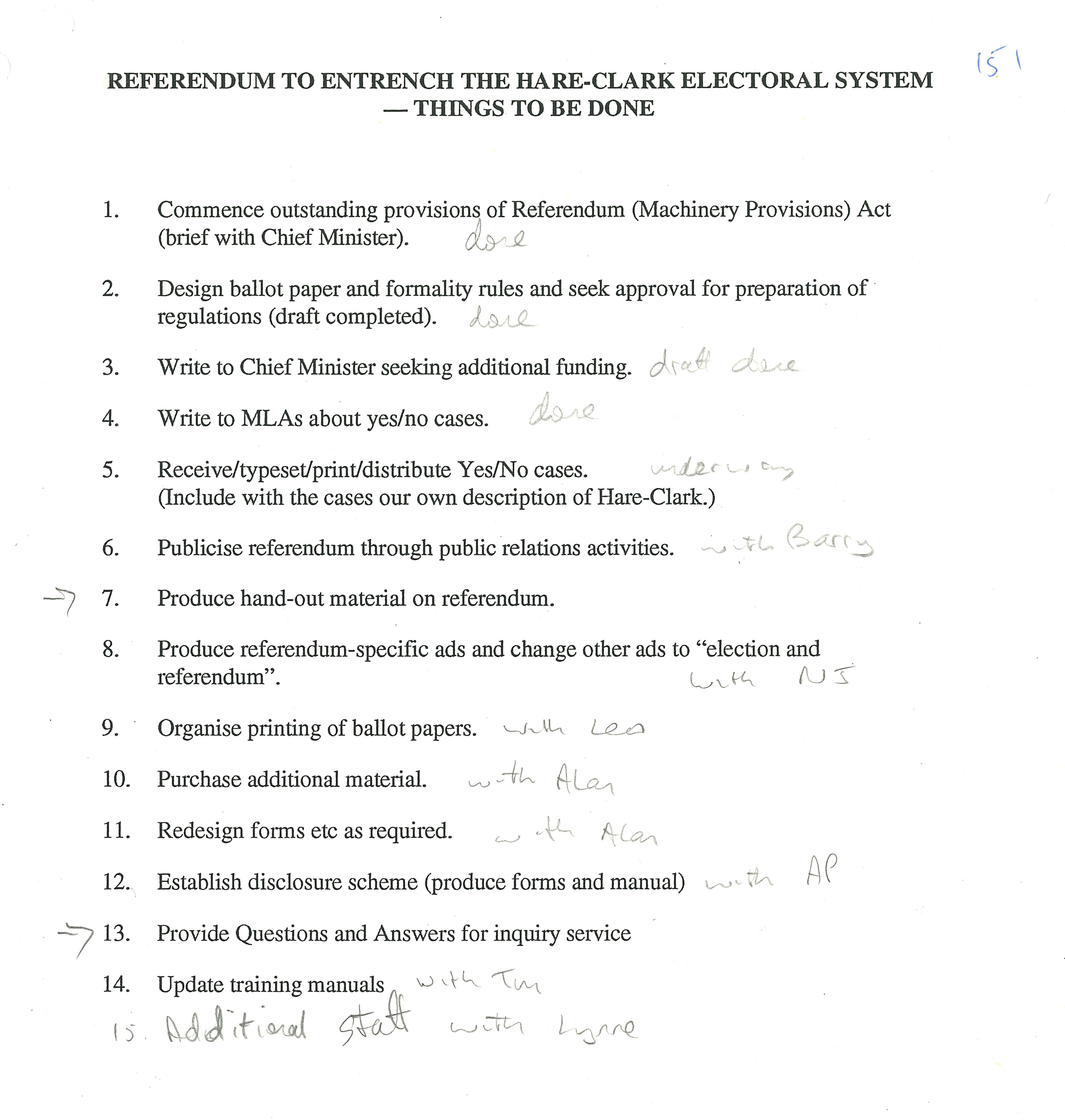 Fig. 4. To-do list for organising the referendum, Dec 1994 or Jan 1995
There was cross party and independent support for entrenching Hare-Clark within the Legislative Assembly:
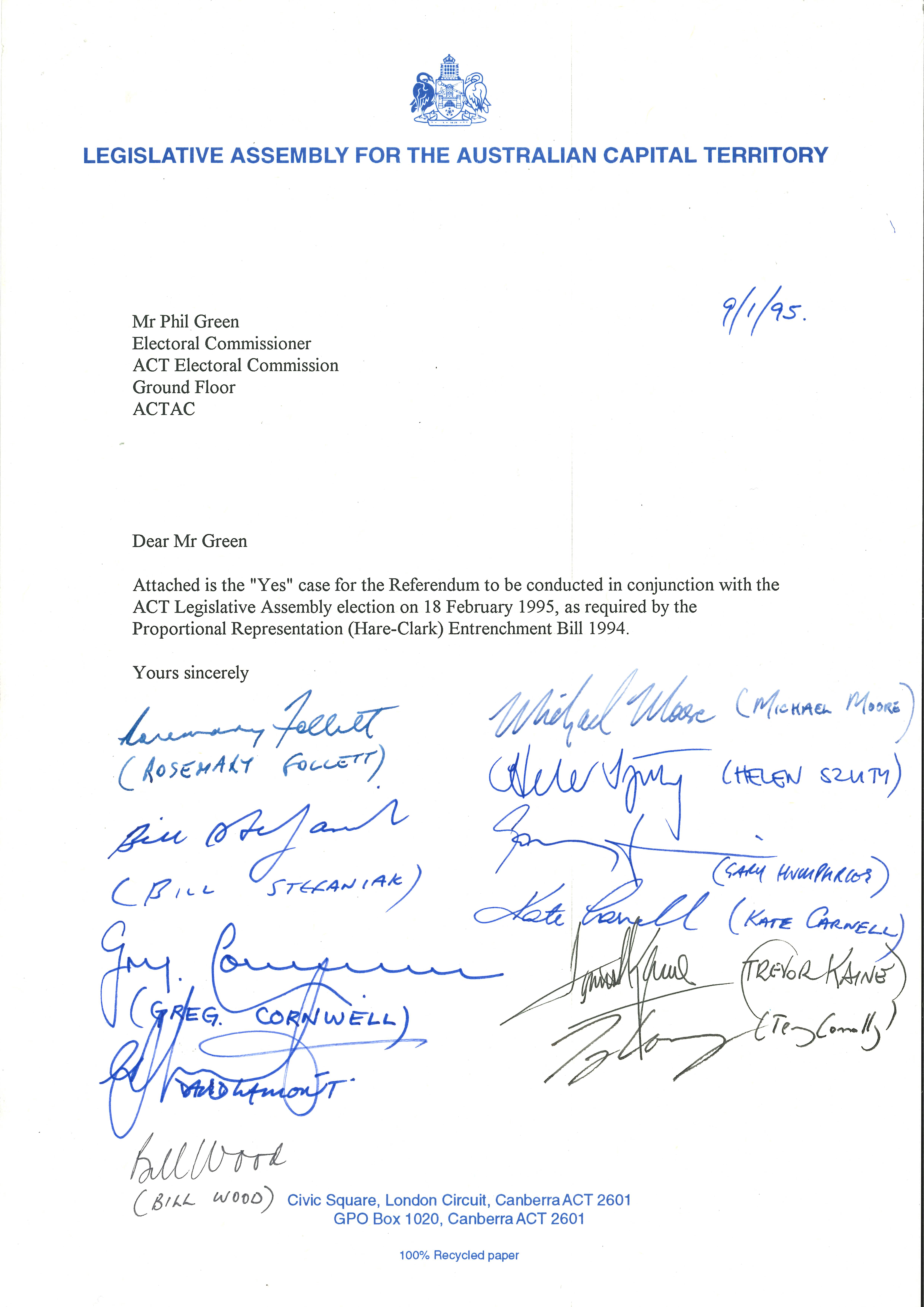
Fig. 5. Cover letter for Yes case for Hare-Clark entrenchment referendum, 9 Jan 1995
The most prominent no campaigner, and the only one in the Assembly, was Dennis Stevenson, an Abolish Self-Government Coalition MLA. He was therefore responsible for preparing the No case. This was distributed, along with the Yes case and information about the referendum, to householders ahead of the vote on 18 February 1995. Stevenson argued that the Hare-Clark system, and in particular, having more than one electorate in the ACT, would benefit the major parties and make it more difficult for small parties and Independents to be elected.
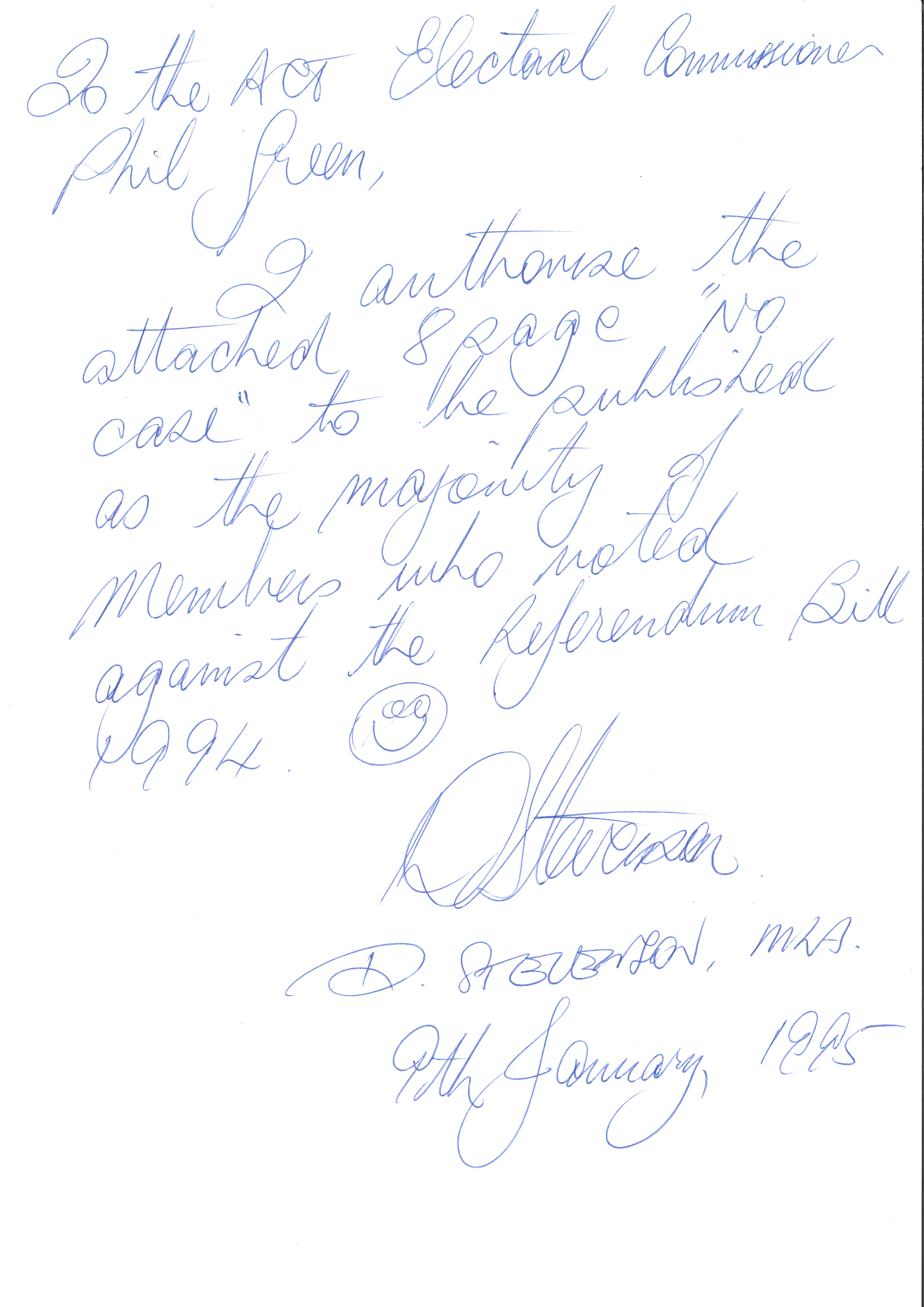
Fig. 6. MLA Dennis Stevenson's cover letter for his No case, 9 Jan 1995
The full yes and no cases were set out in the referendum pamphlet that was sent to all ACT households:
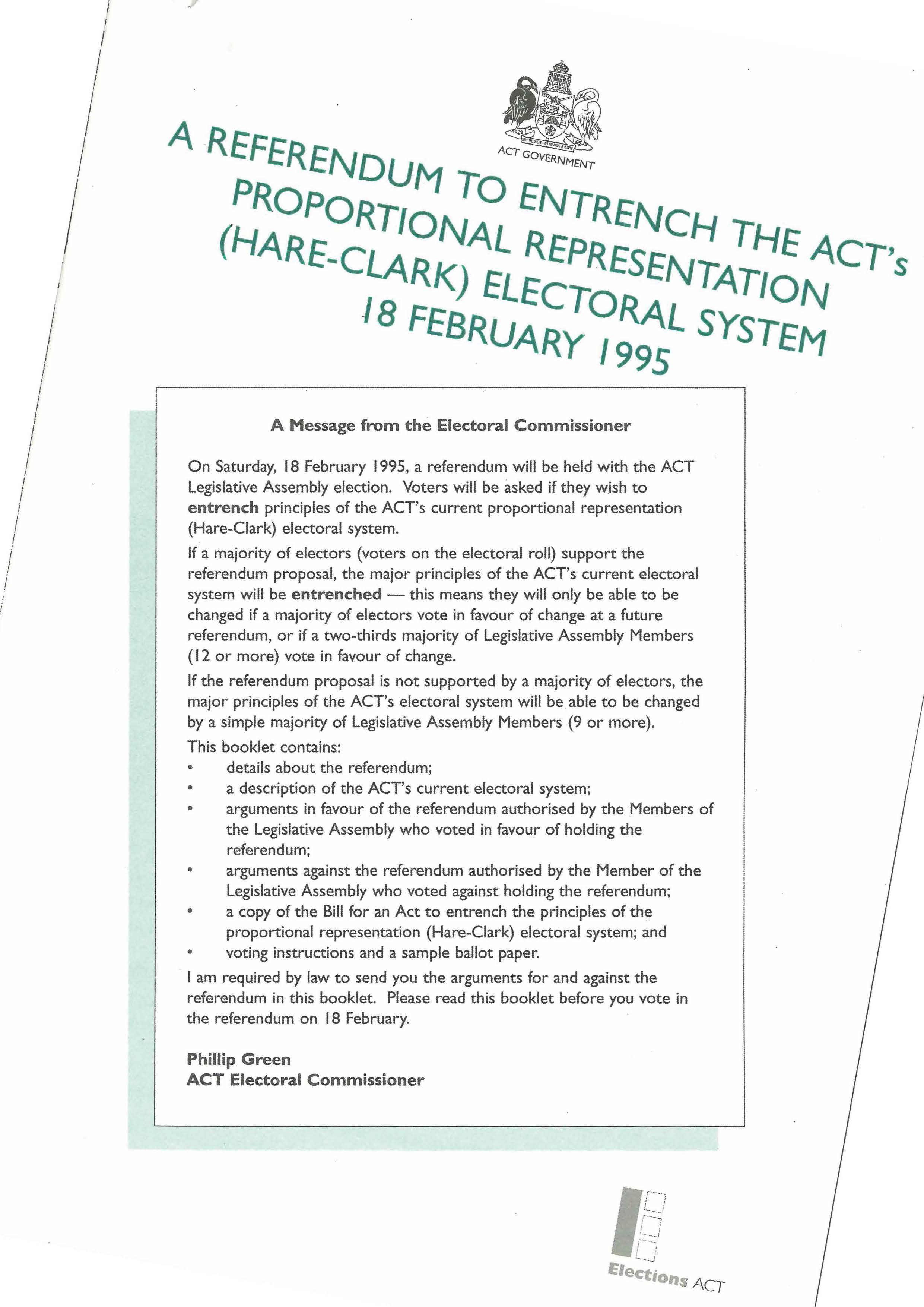
Fig. 7. Cover of entrenchment referendum information leaflet, 1995
Results
The Yes vote passed convincingly, with a 65% majority of the formal vote.xiii
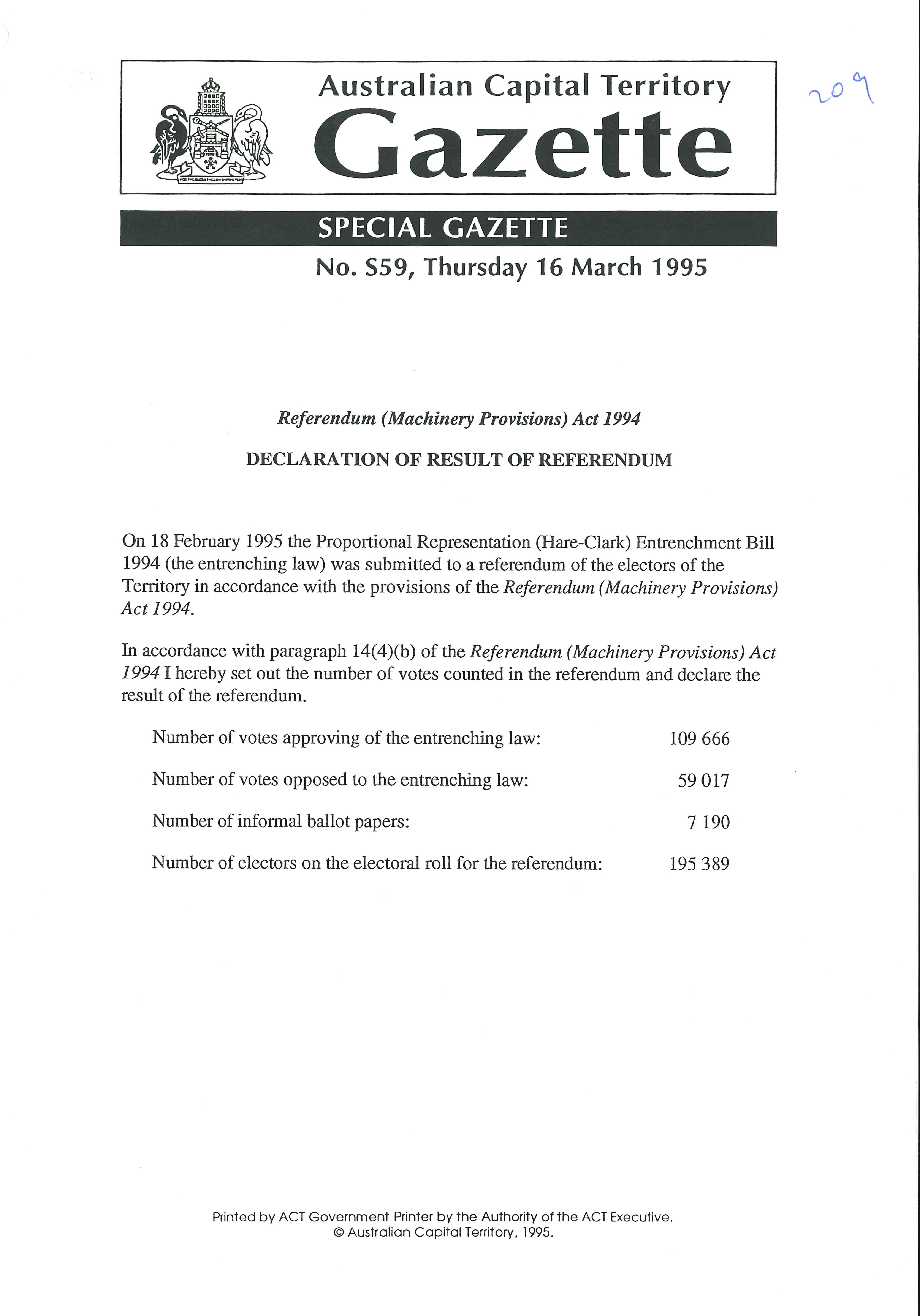
Fig. 8. Gazette notice of entrenchment referendum results, 16 Mar 1995
The result of the referendum ensured the consistency of the electoral system in the ACT over the past three decades. While the size and shape of ACT electorates and the number of their representatives in the Assembly have changed over time, the provisions of the referendum have maintained both stability and flexibility. This has contributed to the broad view of self-government in the Territory as a success.
Figures
Fig. 1. Thomas Hare, 27 April 1863, by Camille Silvy. National Portrait Gallery, London. Image ID: Ax62758
Fig. 2. Catherine Helen Spence, c. 1900, photographer unknown. State Library of South Australia, https://collections.slsa.sa.gov.au/resource/B+36575
Fig. 3. Portrait of Andrew Inglis Clark, [1909?], by Vandyck photographers. National Library of Australia, http://nla.gov.au/nla.obj-136410563
Fig. 4. To-do list for organising referendum. ArchivesACT file 96/19851
Fig. 5. Cover letter for Yes case for Hare-Clark entrenchment referendum, Jan 1995. ArchivesACT file 94/20920
Fig. 6. MLA Dennis Stevenson's cover letter for his No case, Jan 1995. ArchivesACT file 94/20920
Fig. 7. Cover of referendum information leaflet. ArchivesACT file 94/20920
Fig. 8. Gazette notice of 1995 referendum results. ArchivesACT file 96/19851
ACT Government files used
ArchivesACT file 94/20920 - ACT ELECTORAL COMMISSION, REFERENDUM TO ENTRENCH HARE-CLARK - YES / NO, CASE 1995
ArchivesACT file 97/20032 - ACT ELECTORAL COMMISSION, HARE-CLARK INFORMATION
ArchivesACT file 96/19851 - ACT ELECTORAL COMMISSION, ELECTORAL INFORMATION & ADVICE - ADVICE - ELECTORAL LEGISLATION - REFERENDUM, PROPORTIONAL REPRESENTATION (HARE CLARK) ENTRENCHMENT BILL 1994
References
i Canberra & District Historical Society Canberra Day Oration 2025: Gary Humphries AO. National Library of Australia, 12 March 2025. https://www.youtube.com/watch?v=MEF5xkn8JtQ
ii ElectionsACT. Hare-Clark electoral system. https://www.elections.act.gov.au/elections/our-electoral-system/elections-in-the-act/hare-clark-voting-system, accessed 15 Apr 2025
iii ElectionsACT. Hare-Clark electoral system. https://www.elections.act.gov.au/elections/our-electoral-system/elections-in-the-act/hare-clark-voting-system, accessed 15 Apr 2025
iv Susan Eade. Catherine Helen Spence (1825 – 1910). Australian Dictionary of Biography, https://adb.anu.edu.au/biography/spence-catherine-helen-4627, accessed 15 Apr 2025
v State Library of South Australia. LibGuide: Catherine Helen Spence. https://guides.slsa.sa.gov.au/spence, accessed 29 Apr 2025
vi H. Reynolds. Andrew Inglis Clark (1848-1907). Australian Dictionary of Biography, https://adb.anu.edu.au/biography/clark-andrew-inglis-3211, accessed 15 Apr 2025
vii Neil Robson. “A Busy Life”. Proportional Representation Society of Australia (Victoria-Tasmania) inc. 2013. https://www.prsa.org.au/robson_life.pdf, accessed 15 Apr 2025
viii ABC Canberra. Wed 31 May 2017. Canberra Mornings: ACT Electoral Commissioner Phil Green retires (interview by Genevieve Jacobs). https://www.abc.net.au/listen/programs/canberra-mornings/phil-green/8575128, accessed 15 Apr 2025
ix ACT Legislative Assembly Ballot Papers, 1989, with pen and ink drawings by Geoff Pryor and autographs (1992). https://www.cmag.com.au/collection/items/act-legislative-assembly-ballot-paper/catalogue
x “Neil Robson on ACT Radio”. Quota Notes: Newsletter of the Proportional Representation Society of Australia. December 1991. https://www.prsa.org.au/qn/64.html#section2, accessed 15 Apr 2025
xi Hare-Clark: 3 parties agree (1991, April 11). The Canberra Times (ACT : 1926 - 1995), p. 1. Retrieved April 16, 2025, from http://nla.gov.au/nla.news-article122356099
xii CT 15/10/1992 - https://trove.nla.gov.au/newspaper/article/126949190; CT 5/3/1992 https://trove.nla.gov.au/newspaper/article/122401893
xiii Yes for Hare-Clark (1995, February 20). The Canberra Times (ACT : 1926 - 1995), p. 4. Retrieved April 16, 2025, from http://nla.gov.au/nla.news-article133336986
Ready to start your own research?
Contact us through our Request a record - ArchivesACT and we will be happy to help.
File Readers/Viewers
If you do not already have compatible software on your computer, free file readers/viewers can be downloaded from the following links.
 PDF files require Adobe Acrobat Reader
 PPS files require Microsoft PowerPoint Viewer
 XLS files require Microsoft Excel Viewer