
Find of the Month
August 2025
Small wonders:
Protecting the ACT's rare fauna
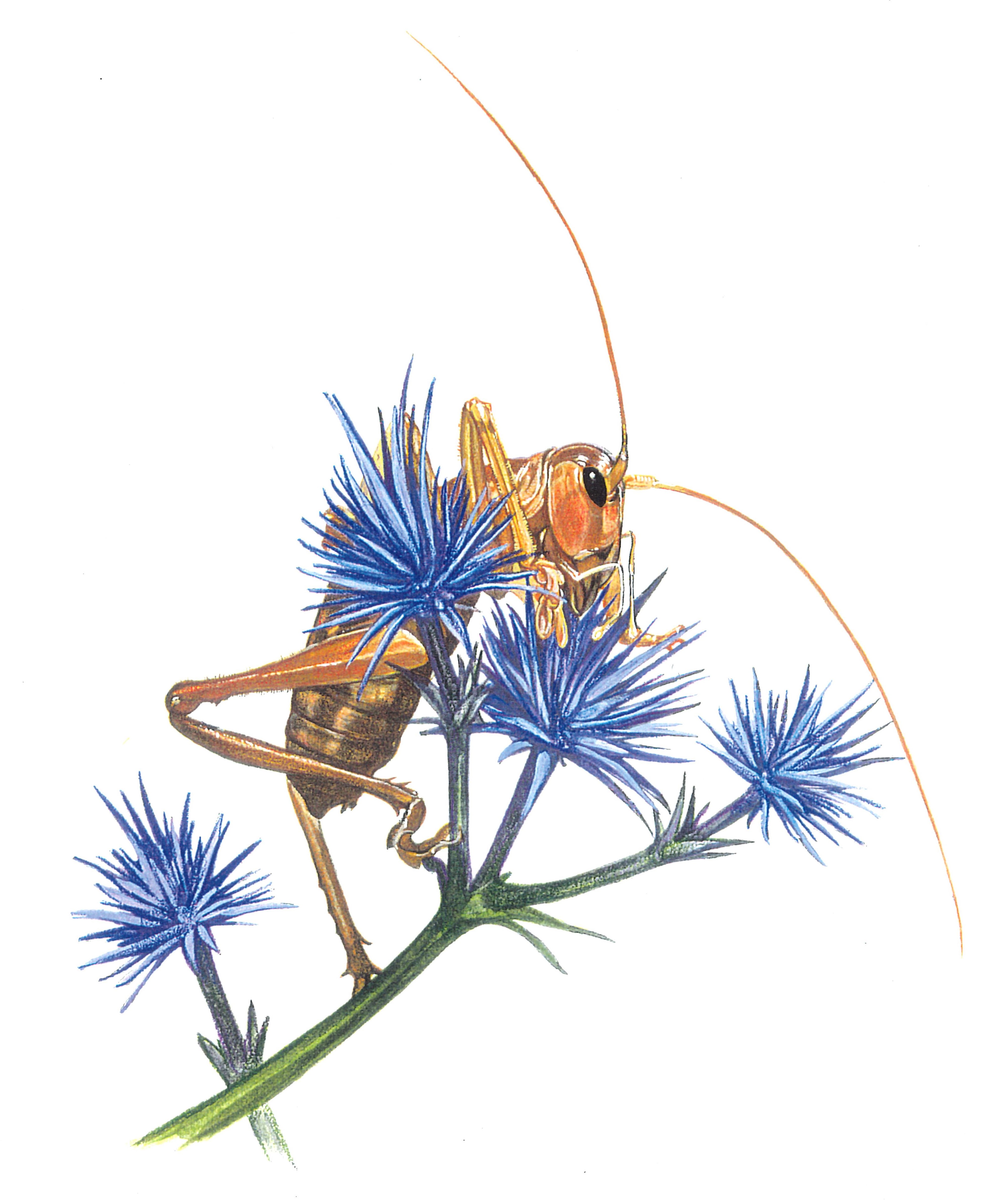
Fig. 1. Canberra Raspy Cricket, by Marjorie Crosby-Fairall, c. 2000
We’ve previously written about efforts to protect the ACT’s mammal emblem, the Southern Brush-tailed Rock-wallaby (Petrogale penicillata). This month, we’re turning our attention to some of the other, smaller animals that call the ACT home.
ArchivesACT holds a wide range of records that are 20 years old or more that relate to these species. They include surveys and monitoring reports, habitat assessments, committee papers, workshop reports, research papers, and action plans.
There are also photographs and drawings of the animals and their habitats. Many of the photographs were taken in the field by conservation officers to record environmental conditions and sightings. Others are striking images by private photographers and artists, used by the ACT Government for public education and awareness. Some of these are reproduced in this article.
Northern Corroboree Frog (Pseudophryne pengilleyi)
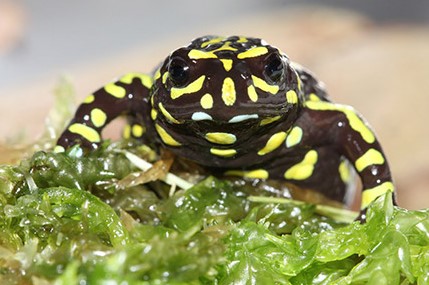
Fig. 2. Northern Corroboree Frog
This tiny, critically endangered frog is known for its vivid black and yellow or lime green colouring, varying from the Southern Corroboree frog. Its biggest threat is the chytrid fungus, which has devastated amphibian populations worldwide.
The frog is also vulnerable to habitat degradation and drought, and was severely affected by the 2003 Canberra fires.i A folder of photographs of known Northern Corroboree Frog breeding sites includes a series of photographs taken a month after the fires, showing the damage at the bogs and pools near Mount Ginini in Namadgi National Park. Photographs taken two months later show frog eggs, now even more precious, being collected for breeding programs. Since then, more than 2,000 frogs have been released at Tidbinbilla Nature Reserve, in a program run with partners including zoos and ANU researchers.

Fig. 3. Field officers inspecting Corroboree Frog habitat in the Brindabellas, 18 Feb 2003

Fig. 4. Murray Evans collecting Corroboree Frog eggs at Hanging Flat (upper), 8 April 2003, by P. Osmay
Pink-tailed worm lizard (Aprasia parapulchella)
Unless you’ve been actively searching, you’re unlikely to have stumbled across this shy and tiny creature in your garden or while bushwalking, as it lives under rocks in only a few places. Locally, it is most closely associated with Mount Taylor, but it has also been found at several other locations in the ACT, as well as in isolated regions of Victoria and New South Wales. The album reproduced in Fig. 5 shows photographs taken at various sites in the ACT and NSW during 1990–1991.

Fig. 5. Photographic survey of Aprasia parapulchella sites, 1990-1991

Fig. 6. Aprasia parapulchella (live) found in post-fire survey, Mount Taylor, 13 Dec 1990
There are numerous photographs on NatureMapr which more clearly show the colouring and size of this reptile.
Some of the written records about this species (see Fig. 7) highlight how manual our species tracking tools were until relatively recently. The folders include handwritten research notes, word-of-mouth sightings, and landline numbers – then only six-digits – a reminder of how fieldwork and communication were conducted before digital tools became widespread.

Fig. 7. Notes on Aprasia parapulchella, c. 1982
Striped legless lizard (Delma impar)

Fig. 8. Striped legless lizard, by Marjorie Crosby-Fairall, c. 2000
It is easy to see how this ACT fauna superstar can be mistaken for a brown snake at a glance. While it only feeds on insects and arachnids, it can metaphorically move mountains, or at least buildings. As highlighted in our October 2021 Find of the Month, the construction of Gungahlin Town Centre was delayed, and ultimately relocated, to protect the lizard’s endangered grassland habitat.
Canberra Raspy Cricket (Cooraboorama canberrae)
The cover star of this article, the Canberra Raspy Cricket, is another rare grassland creature. It is extremely difficult to spot due to its nocturnal habits. It neither jumps nor flies, making it particularly vulnerable to habitat fragmentation. According to local conservationist Michael Bedingfield, this cricket digs burrows up to 60cm deep, lining the walls with a silk-like substance.ii It is known to live in local grasslands including the Dunlop Grasslands Nature Reserve and the Jerrabomberra West Grasslands.
Spotted-tail quoll (Dasyurus maculatus)

Fig. 9. Spotted-tail quoll by Lesley Wallington, Nov. 2003
A bit of an outlier in this list due to its size, the spotted-tail quoll is a fierce apex predator, one of four species of quoll in Australia. They were very common until colonists shot and poisoned these ‘native cats’ in large numbers in the nineteenth century, due to their effectiveness at hunting introduced species like rabbits, hares and pheasants. Though still rare, they’ve recently been reintroduced to Mulligan’s Flat.
Hooded Robin (Melanodryas cucullata cucullata)
Scarlet Robin (Petroica boodang)
Diamond Firetail (Stagonopleura guttata)
This list wouldn’t be complete without some of the beautiful birds of the ACT. The three images below are by photographer Helen Fallow. All of these species at risk of further decline due to habitat loss, the spread of weeds, competition from other birds like noisy miners, and predation by feral animals and other birds like pied currawongs. You can read more about these birds, and other threatened species of the ACT on this page: ACT threatened species

Fig. 10. Hooded Robin, by Helen Fallow, c. 2004

Fig. 11. Scarlet Robin, by Helen Fallow, c. 2004

Fig. 12. Diamond Firetails, by Helen Fallow, c. 2004
Protecting the ACT’s rare fauna is a collaborative effort. Government ecologists, scientists at CSIRO, ANU, and UC, along with citizen scientists, artists and photographers, all contribute their expertise to this important work.
The archival records held by ArchivesACT reveal not only the history of conservation efforts but also the power of imagery in tracking and raising awareness about these species. From hand-drawn illustrations to field photographs, these visual records have helped shape public understanding and policy.
Today, digital platforms like NatureMapr, Facebook, and community groups continue this legacy, enabling real-time sharing of sightings, sounds, and locations. These tools are helping to build a more connected and informed conservation community.
As we look to the future, the survival of these small wonders will depend on continued vigilance, habitat protection, and public engagement. Whether through research, photography, or simply keeping an eye out on your next bushwalk, everyone has a role to play in preserving the ACT’s unique biodiversity.
ACT Government files used
UNREG-161315. Conservation Research - Photo album - Mount Taylor survey 1990-1991 - photographs of some sites where Aprasia parapulchella have been located - Box CR421
UNREG-161317. Conservation Research - Binder - Prints & drawings - Box CR421
UNREG-161321. Conservation Research - Binder - Wildlife Research & Monitoring - Artwork - Box CR421
UNREG-161316. Conservation Research - Binder - Rare & unusual fauna data - Box CR421
UNREG-161320. Conservation Research - Binder - Corroboree frogs standard monitoring sites - photographs - Box CR421.
Images
Fig. 1. Canberra Raspy Cricket, by Marjorie Crosby-Fairall. ArchivesACT file UNREG-161317
Fig. 2. Northern Corroboree Frog. Source: Tidbinbilla Nature Reserve website, https://www.tidbinbilla.act.gov.au/wildlife/northern-corroboree-frog, accessed 29 Jul 2025
Fig. 3. Field officers inspecting Corroboree frog habitat in the Brindabellas, 18 Feb 2003. ArchivesACT file UNREG-161320
Fig. 4. Murray Evans collecting Corroboree frog eggs at Hanging Flat (upper), 8 April 2003, by P. Osmay. ArchivesACT file UNREG-161320
Fig. 5. Photographic survey of Aprasia parapulchella sites, 1990-1991. ArchivesACT file UNREG-161315
Fig. 6. Aprasia parapulchella (live) found in post-fire survey, Mount Taylor, 13 Dec 1990. ArchivesACT file UNREG-161315
Fig. 7. Notes on Aprasia parapulchella. ArchivesACT file UNREG-161316
Fig. 8. Striped legless lizard, by Marjorie Crosby-Fairall. ArchivesACT file UNREG-161317
Fig. 9. Spotted-tail quoll by Lesley Wallington, Nov. 2003. ArchivesACT file UNREG-161317
Fig. 10. Hooded Robin, by Helen Fallow, c. 2004. ArchivesACT file UNREG-161317
Fig. 11. Scarlet Robin, by Helen Fallow, c. 2004. ArchivesACT file UNREG-161317
Fig. 12. Diamond Firetails, by Helen Fallow, c. 2004. ArchivesACT file UNREG-161317
References
i Corroboree Frog Recovery Program website: Threats, https://www.corroboreefrog.org.au/biology/threats, accessed 29 Jul 2025
ii Michael Bedingfield, News of Friends of Grasslands, Nov-Dec 2022, https://www.fog.org.au/Newsletters/2022-11newsletter.htm; NatureMapr entry for Cooraboorama canberrae: https://canberra.naturemapr.org/species/3341
Ready to start your own research?
Contact us through our Request a record - ArchivesACT and we will be happy to help.
File Readers/Viewers
If you do not already have compatible software on your computer, free file readers/viewers can be downloaded from the following links.
 PDF files require Adobe Acrobat Reader
 PPS files require Microsoft PowerPoint Viewer
 XLS files require Microsoft Excel Viewer