
September 2024
Bringing counterculture to Canberra: Aquarius Festival of University Arts, 1971

Fig. 1. Site of the Aquarius Festival of University Arts at the ANU, by Sue Seddon, May 1971
The Aquarius Festival and its role in the development of 1970s counterculture in Australia is most famously associated with Nimbin in 1973. It has been described as Australia’s equivalent to the Woodstock Festival.
The Nimbin Aquarius Festival was in fact the fourth in a biannual series of festivals organised by the National Union of Australian University Students. The first festival was held in 1967 in Sydney and the second in Melbourne.
The third 8-day festival was held at the Australian National University (ANU) in Canberra in May 1971 and it was here they added ‘Aquarius’ to the title. It was a big undertaking for the ANU and Canberra, with audiences anticipated in the thousands. Many of those attending camped in the Canberra Showground. While this festival perhaps did not have the enduring impact of Nimbin’s counterculture experiment, it was not without ambition and drama. The program had been deliberately redesigned to cater for individual creativity. The organisers hired then relatively unknown director Phil Noyce to make a documentary about it. While the festival itself was mainly peaceful, with only a few arrests, on 21 May a huge anti-war demonstration was staged in Civic which spilled over onto the campus. Canberra’s version of the festival turned out to be about politics and protest as well as entertainment and performance.
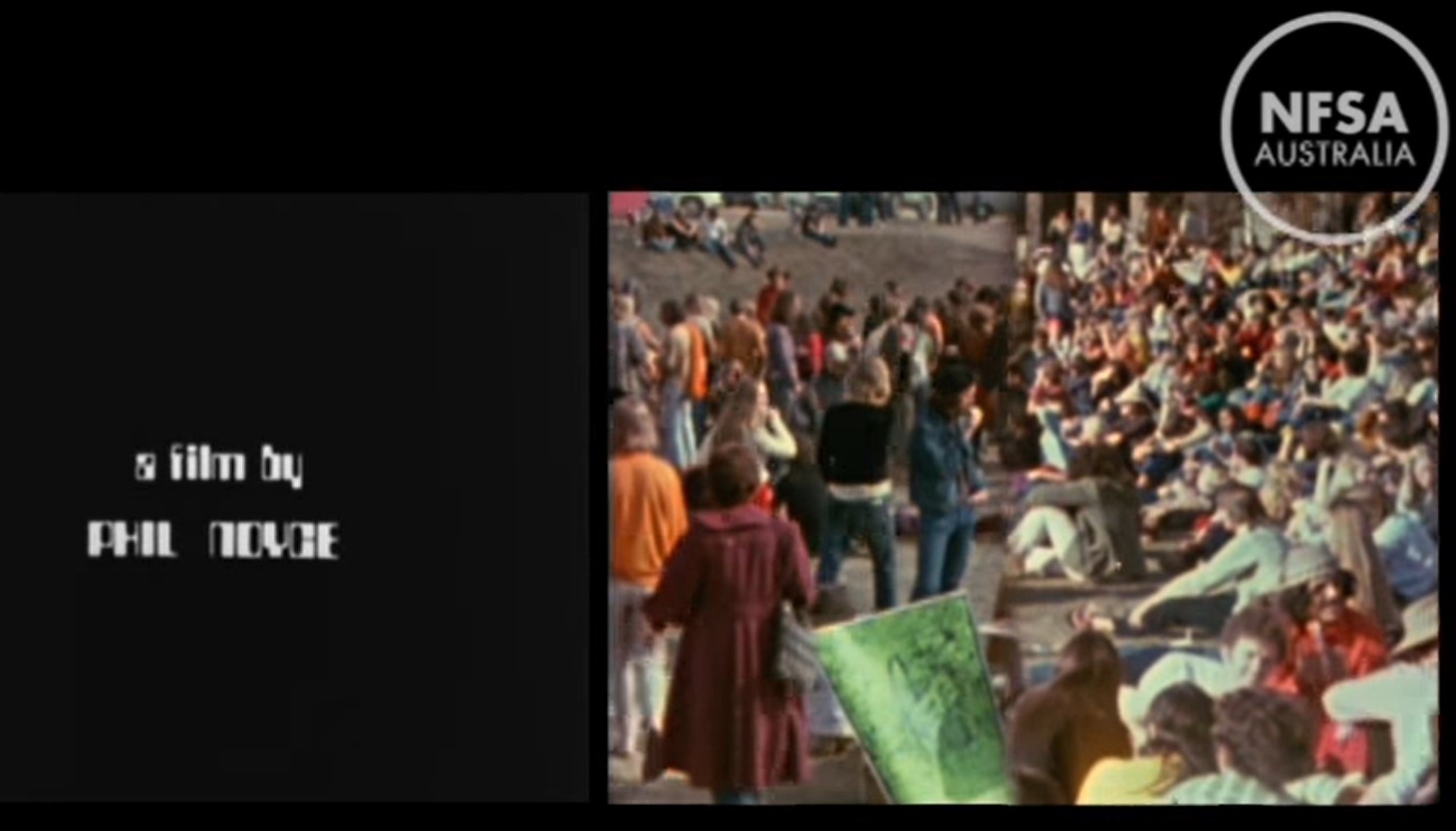
Fig. 2. Trailer for Good Afternoon directed by Phillip Noyce (1971)
An ACT Government—then the Department of the Interior—file 70/2739 Third Aquarius Arts Festival tells some of the behind-the-scenes stories about the organisation and programming for the festival.

Fig. 3 Cover of file 70/2439 - Third Aquarius Arts Festival

Fig. 4. Letter from Festival Liaison Officer to Department of the Interior, 1 Jun 1970
So what events were on the program and who performed? The Canberra Times called the festival plan an ‘an awe-inspiring document’ (19 May 1971). The copy of the program on file provides an interesting counterpoint with contemporary published accounts promoting some of the upcoming attractions. One newspaper proclaimed the Canberra festival would be ‘unique’ with an emphasis placed as much on participation as entertainment for the thousands attending. To cater for ‘creative impulses’ there were plans for a ‘noise room’ and film studio to be provided to encourage students to record their own music and make films.

Fig. 5. Draft program for Aquarius Festival of the Arts
The Australian Union of Students funded filmmaker Phillip Noyce to record the 1971 Festival. Eight days and nights of eclectic programming are summarised in the resulting film entitled Good Afternoon. Noyce adopted creative solutions to stay within the budget and work around traditional styles of documentary-making. Good Afternoon was filmed as a two-screen synchronised screening in black and white and colour. Noyce himself appeared in the extended trailer. In a reference to the anticipated documentary of the event, the article mentions that the best student compositions and films will probably be included in ‘an anticipated film of the 8-day festival that will serve as permanent record of the entire event’ (Tharunka, 1971; 5).
The draft program is something of a who’s who of people who went on to become major figures in the Australia arts and cultural milieu. Australian composer Peter Sculthorpe’s name appears on the program with ‘Musitz, Athletes & Dancers’ at 8pm at the Canberra Theatre. Athletes & Dancers would eventually evolve into the Sydney Dance Company in 1979. They commissioned Sculthorpe to write the work Love 21 which premiered at the festival and was performed by the rock band Tully. Arthur and Corrine Cantrill who led experimental and avant-garde filmmaking in Australia were also scheduled for 7.30pm Tuesday 18 May at Childers Street Hall for ‘an evening of expanded cinema’. Other performers included Bakery, Daddy Cool, Company Caine and Jeff Krozier’s Indian Medicine Magik Show.

Fig. 6. Draft program for Aquarius Festival of the Arts
However, most of the documents on file 70/2739 cover the management of logistical complexities in bringing a festival of that size to Canberra. The earliest document on the file is a letter dated 1970 from the ANU’s Students’ Representative Council to the Secretary of the Department of the Interior outlining the ANU’s plans to host the Third Aquarius Arts Festival from 21-28 May and their expectation of between 5000 and 6000 students and guests from interstate. ‘As you can well imagine’ the author concludes ‘this poses some problems for a campus the size of ANU, and a city the size of Canberra’. The problem of accommodation and sanitation was an ongoing issue running throughout the correspondence, with the Director of Tourism noting ‘the limited assistance’ offered by the ANU’s own halls of residence. In a report sent by the organisers they noted one of the problems was that few students were interested in paying any more than $2.00 per day for accommodation. Hostels, tents, caravans and student billets were some of the alternatives proposed and discussed. As late as February 1971 negotiations between the Minister for the Interior and organisers of the festival were trying to sort out accommodation for visitors who could not be billeted or placed in university halls and local caravan parks. The solution that was eventually reached was a ‘tent town’ at the Canberra Showground. In a report in May 1971, it was noted that the Chief Officer of the Canberra Fire Brigade was very concerned about the arrangement and persuaded organisers to set adequate space between their tents and take certain fire precautions. He organised a tanker and two firefighters to be on site at the showground for the duration of the festival.

Fig. 7. Fire risk planning for Aquarius Festival

Fig. 8. Aquarius Festival, ANU, showing tower used for laser lights display. Sue Seddon, May 1971

Fig. 9. Students at the Aquarius Festival, ANU, by Debbie Argue, May 1971
Finally, file 70/2379 references some of the drama that occurred during the festival, including demonstrations, as well as raids by police during an afternoon performance. More than 150 arrests were made. The last report on file is addressed to the Assistant Secretary outlining all discussions held by the Department of the Interior with the festival organisers. It concludes ‘they were persons who knew what they wanted and were anxious to do the right thing. It seems unfortunately that all who attended the festival were not of a like mind’. Despite this, many who attended remembered it as an exciting experience, with a successful program celebrating 10 hours a day of rock and pop music, classical music, dance theatre, art, drama, politics and literature. It was a pivotal arts and music event for Canberra.
Images
Fig. 1. Site of the Aquarius Festival of University Arts at the ANU, by Sue Seddon, May 1971. ANUA 295-7, http://hdl.handle.net/1885/12250. Courtesy of ANU Archives.
Fig. 2. Trailer for Good Afternoon directed by Phillip Noyce (1971). National Film and Sound Archive. https://www.youtube.com/watch?v=Xx6t3oyuJ2c
Fig. 3. Cover of Territory Records Office (TRO) file 70/2439 – Third Aquarius Arts Festival
Fig. 4. Letter from Festival Liaison Officer to Department of the Interior, 70/2439, folio 2.
Fig. 5. Draft programme for Aquarius Festival of the Arts. TRO File 70/2439, folio 27.
Fig. 6. Draft programme for Aquarius Festival of the Arts. TRO File 70/2439, folio 46.
Fig. 7. Fire risk planning for Aquarius Festival. TRO File 70/2439, folio 55.
Fig. 8. Sue Seddon, Aquarius Festival, ANU, showing tower used for laser lights display., May 1971. ANUA 295-8, http://hdl.handle.net/1885/12251. Courtesy of ANU Archives.
Fig. 9. Debbie Argue, Students at the Aquarius Festival, ANU, May 1971. ANUA 295-1, http://hdl.handle.net/1885/8919. Courtesy of ANU Archives
References
Territory Records Office (TRO) file 70/2439 – Third Aquarius Arts Festival.
Tharunka, Tues 23 March 1971 ‘Aquarius festival of university arts’. https://trove.nla.gov.au/newspaper/article/228113424
The Canberra Times, 14 May 1971. ‘University Festival Opens’ https://trove.nla.gov.au/newspaper/article/131806569
The Canberra Times, 15 May 1971. ‘Students’ arts festival will open today’. https://trove.nla.gov.au/newspaper/article/131806841
The Canberra Times, 20 May 1981. ‘Canberra Police clash with protesters’.
https://trove.nla.gov.au/newspaper/article/131807618
NFSA Trailer Good Afternoon directed by Phillip Noyce (1971). https://www.youtube.com/watch?v=Xx6t3oyuJ2c
NFSA Curated Collections: Aquarius Arts Festival ANU – Wiley Reed and Bob Maza
Ready to start your own research?
Contact us through our Request a record - ArchivesACT and we will be happy to help.
File Readers/Viewers
If you do not already have compatible software on your computer, free file readers/viewers can be downloaded from the following links.
 PDF files require Adobe Acrobat Reader
 PPS files require Microsoft PowerPoint Viewer
 XLS files require Microsoft Excel Viewer