
August 2024
A Canberra (Times) icon: The City Walk fountain

Fig. 1. Canberra Times Fountain, August 1987
In the mid-1970s, with the framework of Canberra’s built environment in place, the National Capital Development Commission (NCDC) intensified its focus on enhancing the city through public art.
This ambition is summarised in a report Harry Nicolson prepared for the NCDC in 1975, titled Provision of Works of Art by Living Artists for the buildings and public places of Canberra:
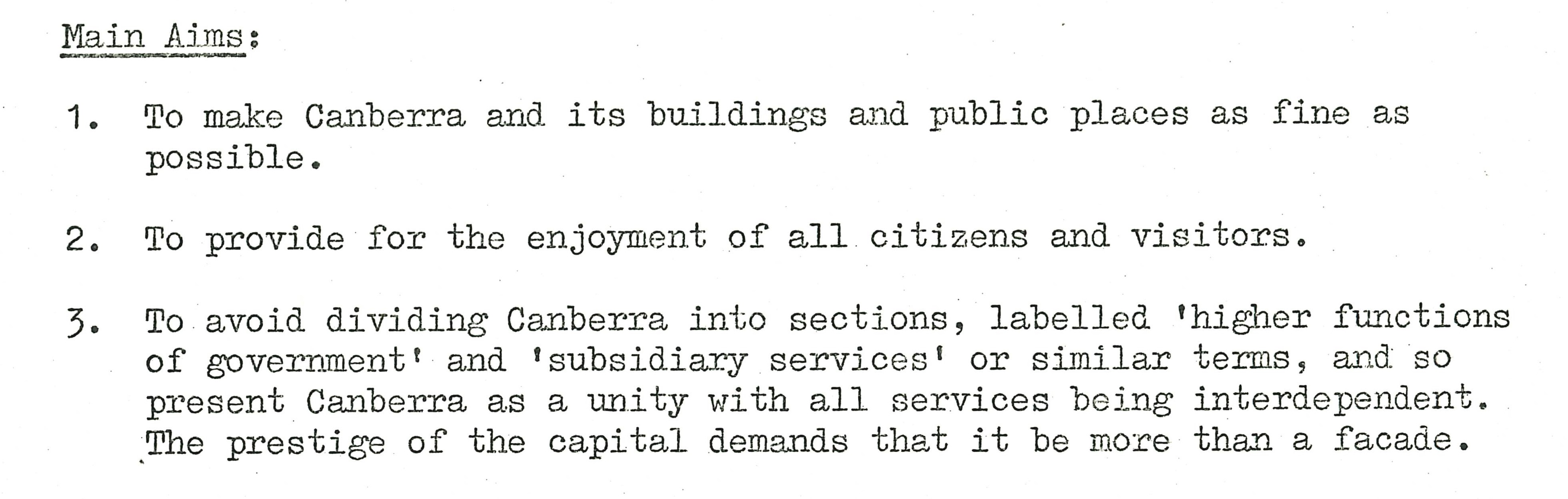

Figs. 2 and 3. Extracts from draft report from Harry Nicolson to NCDC, 1975
An NCDC file, Canberra Times Fountain City Walk by R Woodward (NC-76/00639#1), tells the story of an important example of public art from this era.
The first page on file is a note dated 18 May 1976, recording the Fairfax family’s offer of $45,000 for a public sculpture to mark 50 years of the Canberra Times. In July 1976 the NCDC Commissioner, AJW Powell, wrote to John Fairfax to accept the offer, saying:

Fig. 4. Letter from NCDC Commissioner to John Fairfax, Manager of Canberra Times, 13 July 1976
The NCDC brochure which the Commissioner refers to, Potential Artwork Sites in Canberra’s City Centre (July 1976), is included in the file (and is available online). First among the sites recommended for public sculptures is marked with a 1 in the centre of this plan (fig. 5):

Fig. 5. Plan of City East showing potential sites for public artworks, 1976
You may recognise that Section 51 is the Monaro Mall. It was opened by Sir Robert Menzies in 1963 as the first fully enclosed shopping mall in Australia.[i] (In the late 1980s the Monaro Mall became the Canberra Centre.) The Potential Artworks Sites brochure noted that Section 38 was planned for development with a “major department store and specialty shop complex”—this eventually became the southern end of the Canberra Centre, containing the Myer department store. The closure of Ainslie Avenue to vehicles between Bunda Street and City Walk was also anticipated: “An opportunity exists to define a precinct by creating a ‘space within a space’, using sculptural elements to form a sense of physical enclosure.” See fig. 6 for an impression of the site after the development of Section 38 and the closure of the road to cars.
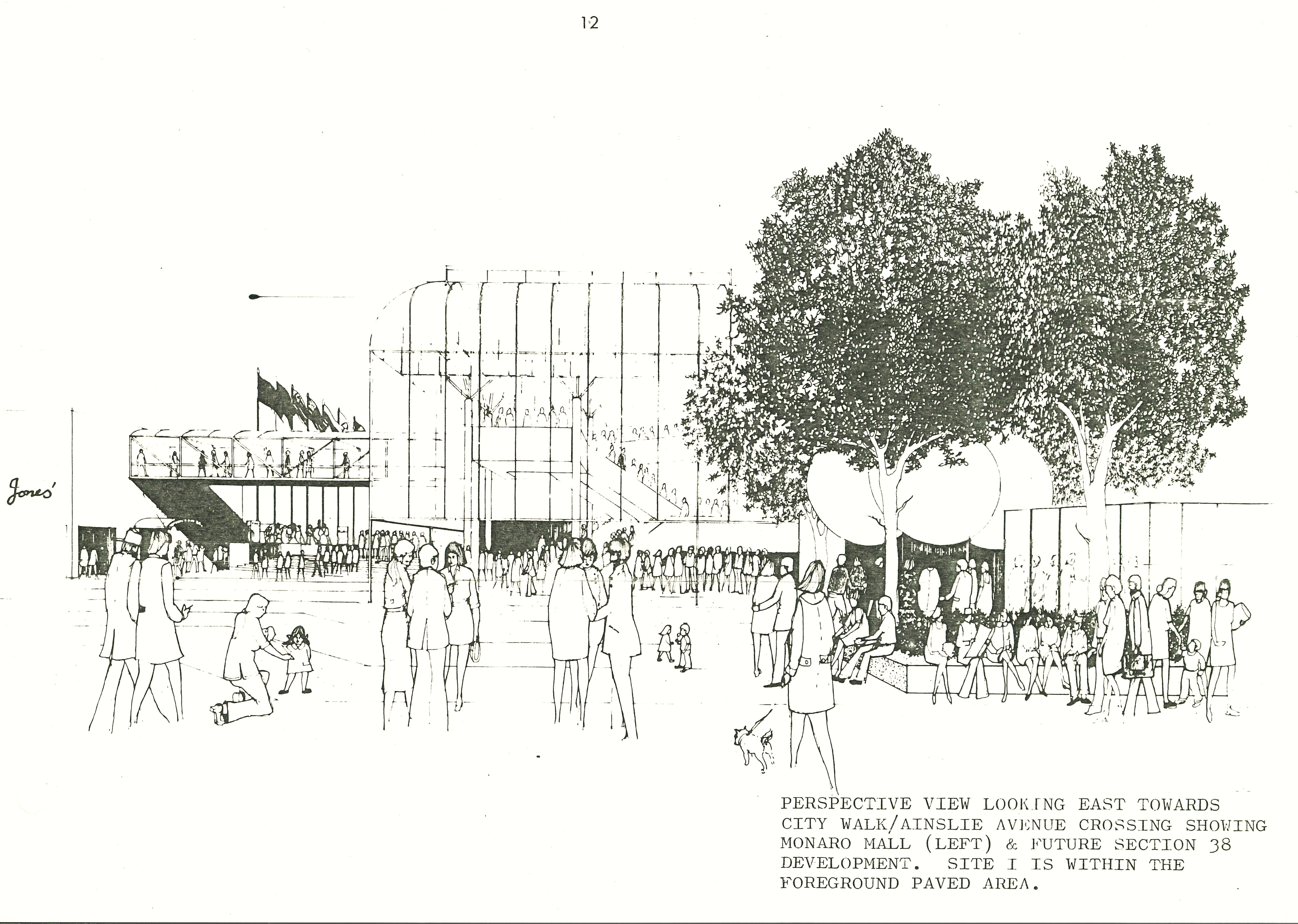
Fig. 6. Perspective view towards City Walk / Ainslie Avenue crossing
Site 1, the intersection of Ainslie Avenue and City Walk was indeed the one chosen by John and James Fairfax for the fountain. They proposed engaging Robert (Bob) Woodward to design it. Woodward was famous as the co-architect of the dandelion-shaped El Alamein Memorial Fountain in Kings Cross, Sydney (fig. 7), and many other well-known fountains in Australia and overseas. He was to design several projects in Canberra, including the Cascade Waterfall at the front of the High Court (fig. 8).

Fig. 7. El Alamein Memorial Fountain, Kings Cross

Fig. 8. Cascade Waterfall, High Court, Canberra
Woodward sent his first detailed proposal for the sculpture to the NCDC via John Fairfax in September 1976 (fig. 9).

Fig. 9. Robert Woodward’s proposal for Canberra Times Fountain design, Sep 1976
While the fountain is described much as it was eventually realised, the file shows the collaboration involved in the planning and construction of the fountain over the next two years. The NCDC’s early hesitations about fountains as a medium, because of their ongoing costs, were overcome by Woodward’s thoughtful and practical responses to questions about design and function. The collaborators in the project included Parks and Gardens, who oversaw the civil engineering works associated with the fountain, and would be responsible for maintenance into the future.
The success of Woodward’s fountains is largely attributable to their respect for their context.[i] For the Canberra Times Fountain, Woodward carefully considered the treescape of the site. He recommended additional tree planting so that that there would be a high canopy to visually complement the fountain and enhance the human experience of the site into the future.

Fig. 10. Sketch for Canberra Times Fountain, by Bob Woodward
In August 1977, Bob Woodward and his wife Margaret came to Canberra from their workshop in Northwood, Sydney, to demonstrate a prototype of the sculpture. John and James Fairfax and representatives of the NCDC and the Department of the Capital Territory attended

Fig. 11. Testing prototype for the Canberra Times Fountain, Aug 1977

Fig. 12. Robert and Margaret Woodward testing prototype for the Canberra Times Fountain, Aug 1977
Michael Grace of the NCDC recorded the outcome of the test:

Fig. 13. Note to file about test of prototype for Canberra Times Fountain
With the successful prototype made, work commenced in earnest on the construction of the fountain and the preparation of the site. The fountain was switched on and officially inaugurated in February 1979.
While looking at the records about the Canberra Times Fountain, we came across a wonderful memo about public art by Richard (Dick) Clough, reproduced in figs 14-17. The first landscape architect employed by the NCDC, Clough was an influential part of Canberra’s development during the 1960s and 1970s.[i] In June 1978, as Chairman of the Artworks Committee, he prepared some notes for the Committee about the qualities of humanistic sculptures.
The Canberra Times Fountain might not meet many of Clough’s specific criteria for humanistic sculpture—it does not possess supernatural powers, nor is it an extraordinary size, or of a humorous character. But it certainly does meet his overall test that the work is appreciated by the majority of people, perhaps loved, and that “if it was removed or destroyed, it would cause widespread indignation or sorrow”. A significant and beautiful sculpture, it is a landmark that gives moments of pleasure to thousands of Canberrans and visitors every day.


Fig. 15. Richard Clough, NCDC. Humanistic Sculptures (minute paper), 27 Jun 1978

Fig. 16. Richard Clough, NCDC. Humanistic Sculptures (minute paper), 27 Jun 1978
Images
Fig. 1. Canberra Times Fountain, August 1987. Part of the Office of the Surveyor General Photographic Collection, ACT3-4586.
Figs. 2 and 3. Extracts from draft report from Harry Nicolson to NCDC, 1975. NC-76/00122#1, folio 145.
Fig. 4. Letter from NCDC Commissioner to John Fairfax, Manager of Canberra Times, 13 July 1976. NC-76/00639#1, folio 7.
Fig. 5. Plan of City East showing potential sites for public artworks, 1976. from Potential Artwork Sites in Canberra’s City Centre, NCDC, 1976.
Fig. 6. Perspective view towards City Walk / Ainslie Avenue crossing, from Potential Artwork Sites in Canberra’s City Centre, NCDC, 1976.
Fig. 7. El Alamein Memorial Fountain. City of Sydney website. https://www.cityofsydney.nsw.gov.au/fountains-and-water-features/el-alamein-fountain. Accessed 1 Aug 2024.
Fig 8. Cascade Waterfall, by Robert Woodward. High Court of Australia forecourt. https://www.hcourt.gov.au/artworks/high-court-building-artworks/cascade-waterfall. Accessed 1 Aug 2024.
Fig. 9. Bob Woodward’s proposal for Canberra Times Fountain design, Sep 1976. NC-76/00639#1, folio 20.
Fig. 10. Sketch for Canberra Times Fountain, by Robert Woodward, April 1977. NC-76/00639#1, folio 54.
Fig. 11. Testing prototype for the Canberra Times Fountain, 10 Aug 1977. NC-76/00639#1, unnumbered folio [65b].
Fig. 12. Robert and Margaret Woodward testing prototype for the Canberra Times Fountain, 10 Aug 1977, NC-76/00639#1, folio 66.
Fig. 13. Note to file about test of prototype for Canberra Times Fountain. NC-76/00639#1, folio 61.
Figs. 14-16. Richard Clough, NCDC. Humanistic Sculptures (minute paper), 27 Jun 1978. NC-76/00122#2, folios 63-65.
References
NC-76/00639#1. Canberra Times Fountain, Part 1.
NC-76/00122#1. Sculpture & Art works in ACT policies and practices, Part 1.
NC-76/00122#2. Sculpture & Art works in ACT policies and practices, Part 2.
i James Coleman, The RiotAct. https://the-riotact.com/the-canberra-centre-was-an-australian-first-when-it-opened-as-the-monaro-mall-60-years-ago/648549. Published 3 Apr 2023, accessed 1 Aug 2024
ii Andrew Woodward, ‘Vale Robert Woodward AM 1923-2010’. Architecture, AU. https://architectureau.com/articles/vale-robert-woodward-am-19232010-2. Published 1 Jul 2010, accessed 1 Aug 2024.
iii UNSW Sydney, ‘Vale Richard Clough’. https://www.unsw.edu.au/news/2014/12/vale-richard-clough. Published 8 Dec 2014, accessed 1 Aug 2024.
Ready to start your own research?
Contact us through our Request a record - ArchivesACT and we will be happy to help.
File Readers/Viewers
If you do not already have compatible software on your computer, free file readers/viewers can be downloaded from the following links.
 PDF files require Adobe Acrobat Reader
 PPS files require Microsoft PowerPoint Viewer
 XLS files require Microsoft Excel Viewer