
September 2022
Nurturing Nature
Tidbinbilla Fauna Reserve

The northern end of the valley circa 1960s1
The area Canberrans now know as the Tidbinbilla Nature Reserve has had a few name changes since 2000 acres of land was first put aside for the protection of flora and fauna. The Royal Society’s Canberra Branch first proposed the idea of a nature reserve in this area to the Department of the Interior in 1936. Any development however was halted during the second World War and no real progress was made until the Royal Society again got the ball rolling in the mid 1960’s. As a result of their suggestion, another 8000 acres was added to the original proposed area of the reserve, so that it took up the whole of the Tidbinbilla Valley. In 1964 a ranger was stationed in the valley and the work of rehabilitation and conservation begun. Soon after this, a biologist and a resident manager were also appointed. For this month’s Find of the Month we are taking a look at a file that sets out the programme written in 1967 for the development of the Tidbinbilla Fauna Reserve.[i]
By 1967 public visitation pressure was building rapidly and was expected to continue to increase as the existence of the reserve was promoted. A plan was drafted to develop the reserve for multiple uses including conservation, education and public recreation. Car parking and picnic areas would be provided, but restricted to the developed portion of the reserve. The majority of the area would be accessible only by walking tracks.[ii]
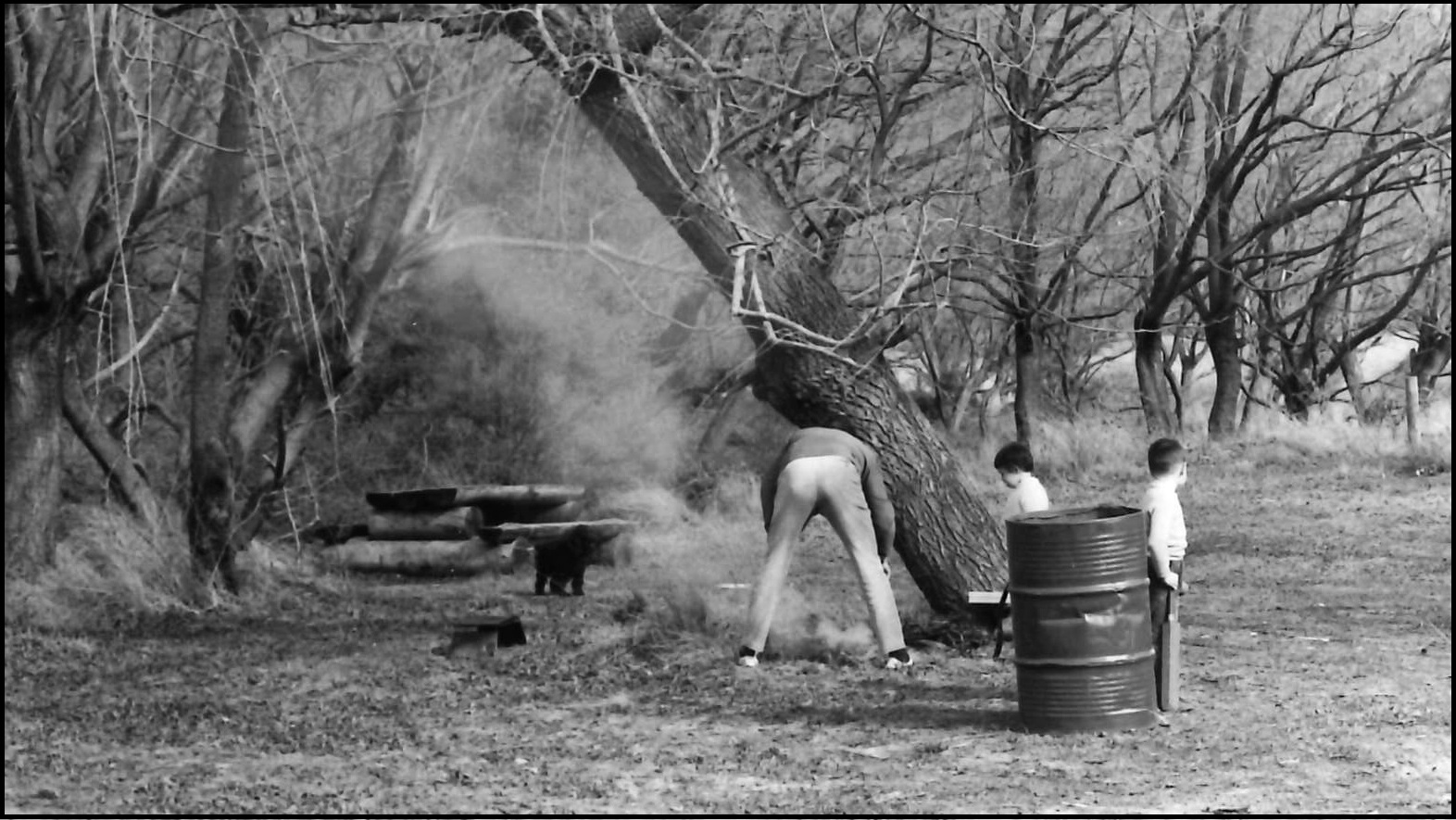

Increasing visitation brings problems; Parking...dogs and careless fires2
A zoning plan was then set up for the reserve. The topography of the area lent itself to division into three zones which would determine the activities that could take place in each.
- Zone A – all the steeper slopes and inaccessible areas to the top of the ranges surrounding the valley. Vehicle traffic restricted to fire-fighting appliances with foot traffic permitted but no facilities provided.
- Zone B – included most of the timbered foothill country between the steeper slopes and valley floor. Walking trails made available for education and recreation and vehicle access limited to central points.
- Zone C – consisting of the open undulating country along the valley floor and developed for the display of native fauna.

Zoning plan 3
The report refers to the reserve as the Tidbinbilla Fauna Reserve and includes a brief summary of the geology and flora as well as the fauna of the area. Possibly the emphasis on fauna reflected the plan to have native animals on display for visitors.
It was believed that the area would have been entirely covered by trees before the introduction of livestock. The valley floor was largely cleared as a result of the grazing of livestock. The report goes on to comment that:
On the open cleared land, native grasses such as Danthonia and Poa species are in evidence and these together with some introduced clovers have provided the bulk of the grazing for domestic stock and fauna. [i]
The native grasses having survived would have been encouraging for the development of the reserve given that the grazing by domesticated stock had begun over 100 years earlier.
A list of native fauna identified in the reserve includes birds such as the lyrebird, wonga pigeon and the gang- gang and yellow-tailed black cockatoos. Some of the mammals known to reside in the area were the echidna, tiger cat, brush-tailed and ring-tail possum and the greater glider. The entry for koala states that they were ‘not found to date, and possibly absent from the valley, though once common.’[ii]

Dasyurus maculatus - Tiger cat - Tidbinbilla Nature Park 19664
In 1967 it was recognised that the increasing popularity of the reserve was driving the need to manage the movement of visitors and where they ventured. It was estimated that in the following five years public visits would increase to 1,000 people per day. This would obviously require additional resources to supply basic services such as toilet blocks, picnic shelters and fireplaces, road and walking tracks and fencing. If picnic shelters and fireplaces were to be provided it was expected that staff labour was also needed to supply firewood and remove rubbish. This was on top of the construction of offices and reception buildings. The expenditure needed for all this work was considerable, but it was obvious that the people of Canberra and its surrounding districts depended on the reserve for recreational use.

Plan showing the layout of 18 holes - January 19505
The development programme also had to include planning for the research and education outcomes that the reserve was required to deliver. At this time, it seemed much of the education component would be provided by erecting enclosures for at least some of the local fauna so that visitors could wander through them. It was thought compounds of between 10 and 50 acres would be built for kangaroos and smaller enclosures for the smaller forest mammals. A wet-land area for water birds was also one of the earliest developments. The responsibility for biological research fell on the biologist who had been appointed earlier, supported by a technical assistant to help out with the research.
To browse through this month’s featured record, it becomes clear that the results of much of the early planning for what is now the Tidbinbilla Nature Reserve can be seen if we were to visit today. It also shows us that the reserve was just as popular in 1967 as it is today. The visits, conservation research and education remain important and long may they continue.
If you would like to view the complete file, please contact us to arrange a visit to our reading room.

Plan showing the layout of 18 holes - January 19505
File used
ArchivesACT, 2013/4742 – Parks Reserves & Public Places – Planning – Space usage plans – Tidbinbilla Fauna Reserve – Programme of Development – 1967.
ArchivesACT, 2013/4698 – Community Relations – Marketing – Photographs – Tidbinbilla October 1966.
Images
1 - ArchivesACT, 2013/4742 – Parks Reserves & Public Places – Planning – Space usage plans – Tidbinbilla Fauna Reserve – Programme of Development – 1967.
2 – ibid.
3 – ibid.
4 – ArchivesACT, 2013/4698 – Community Relations – Marketing – Photographs – Tidbinbilla October 1966.
5 - ArchivesACT, 2013/4742 – Parks Reserves & Public Places – Planning – Space usage plans – Tidbinbilla Fauna Reserve – Programme of Development – 1967.
6 – ibid.
Ready to start your own research?
Contact us through our Request a Record service and we will be happy to help.
File Readers/Viewers
If you do not already have compatible software on your computer, free file readers/viewers can be downloaded from the following links.
 PDF files require Adobe Acrobat Reader
 PPS files require Microsoft PowerPoint Viewer
 XLS files require Microsoft Excel Viewer